
Last updated September 22, 2026
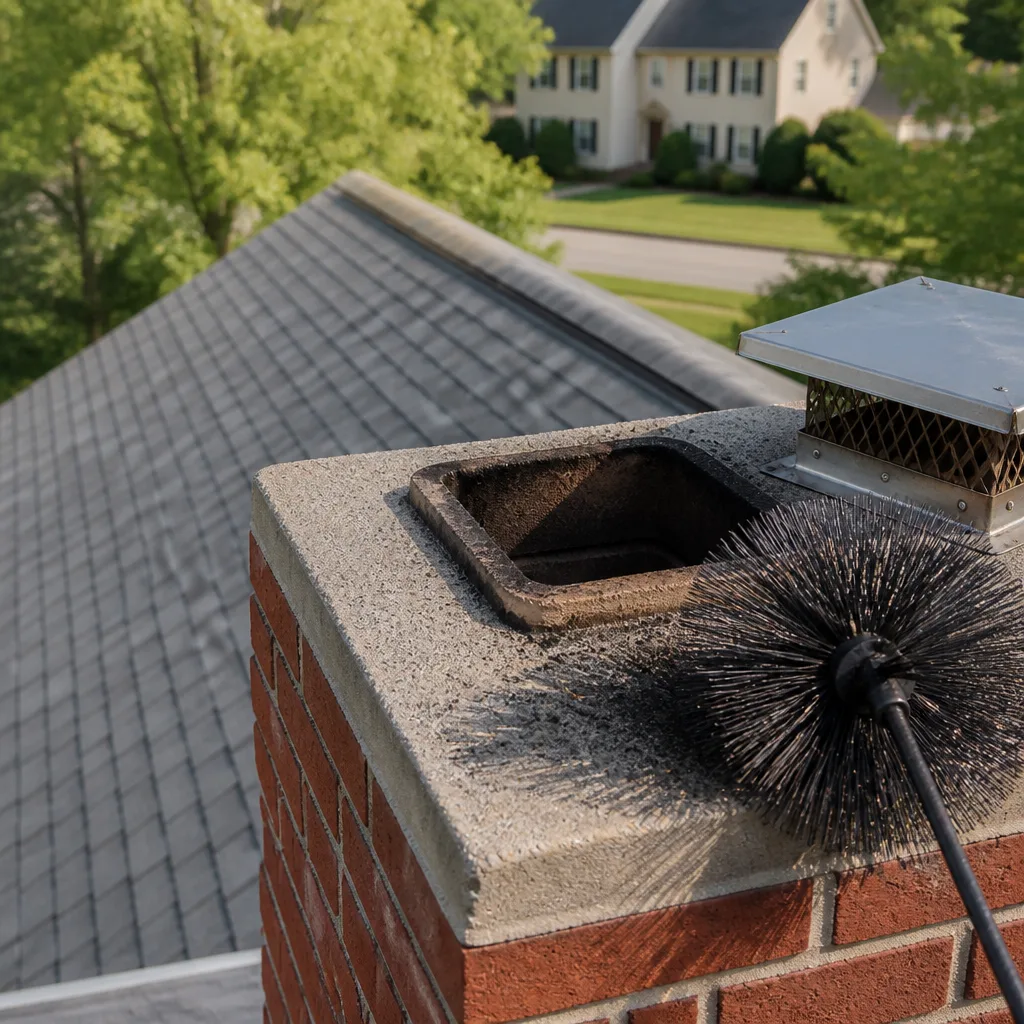
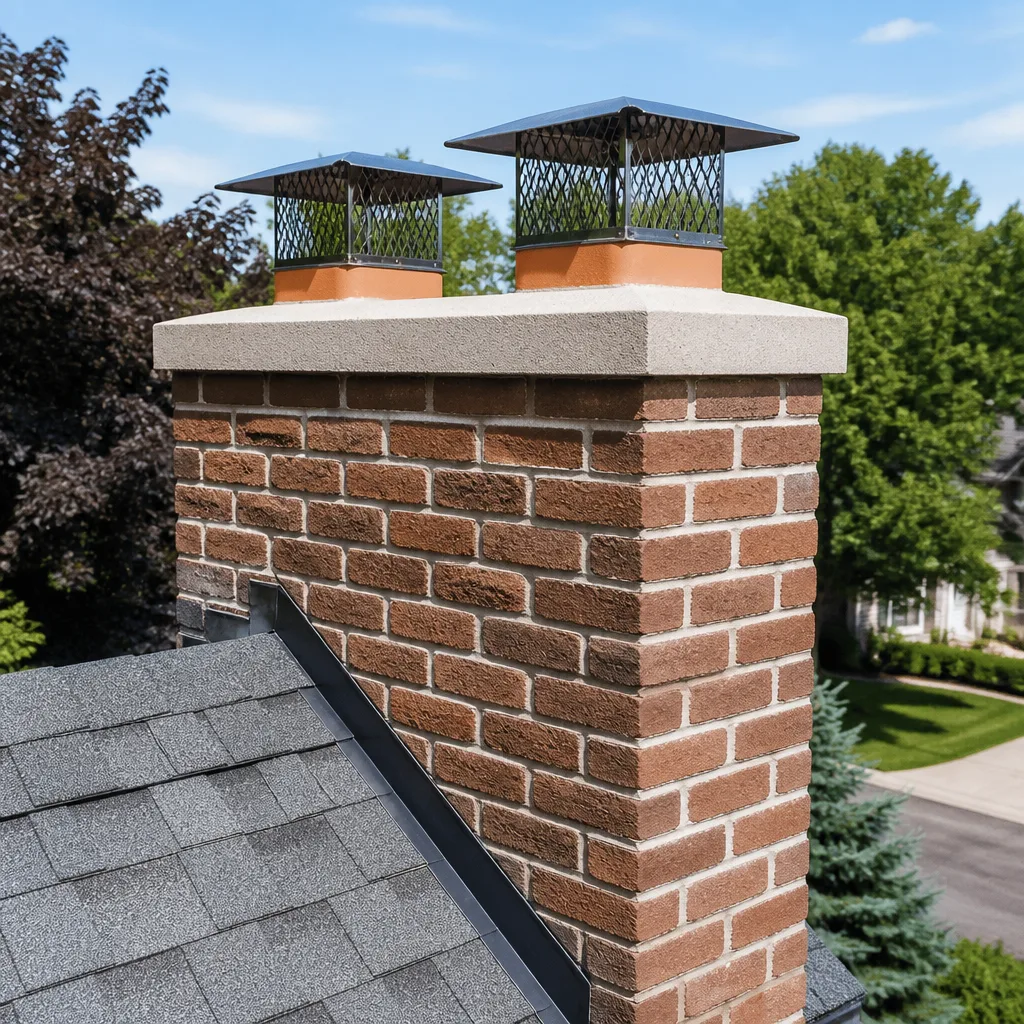
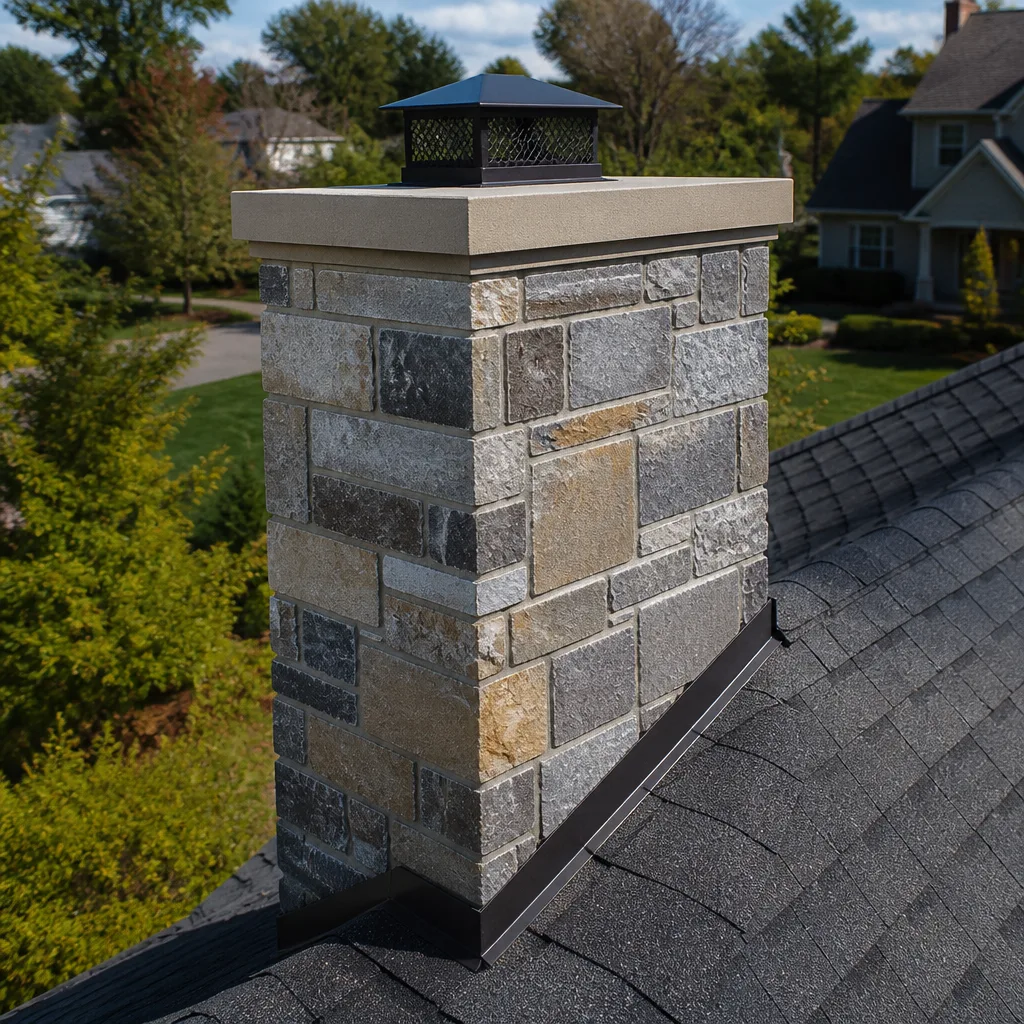
Level 1 sweep and inspection to the NFPA 211 annual standard - flue, crown, cap, and flashing checked and photographed
Chimney sweep logs do not sweep chimneys. They loosen some creosote - which then falls where a brush and vacuum still have to collect it.
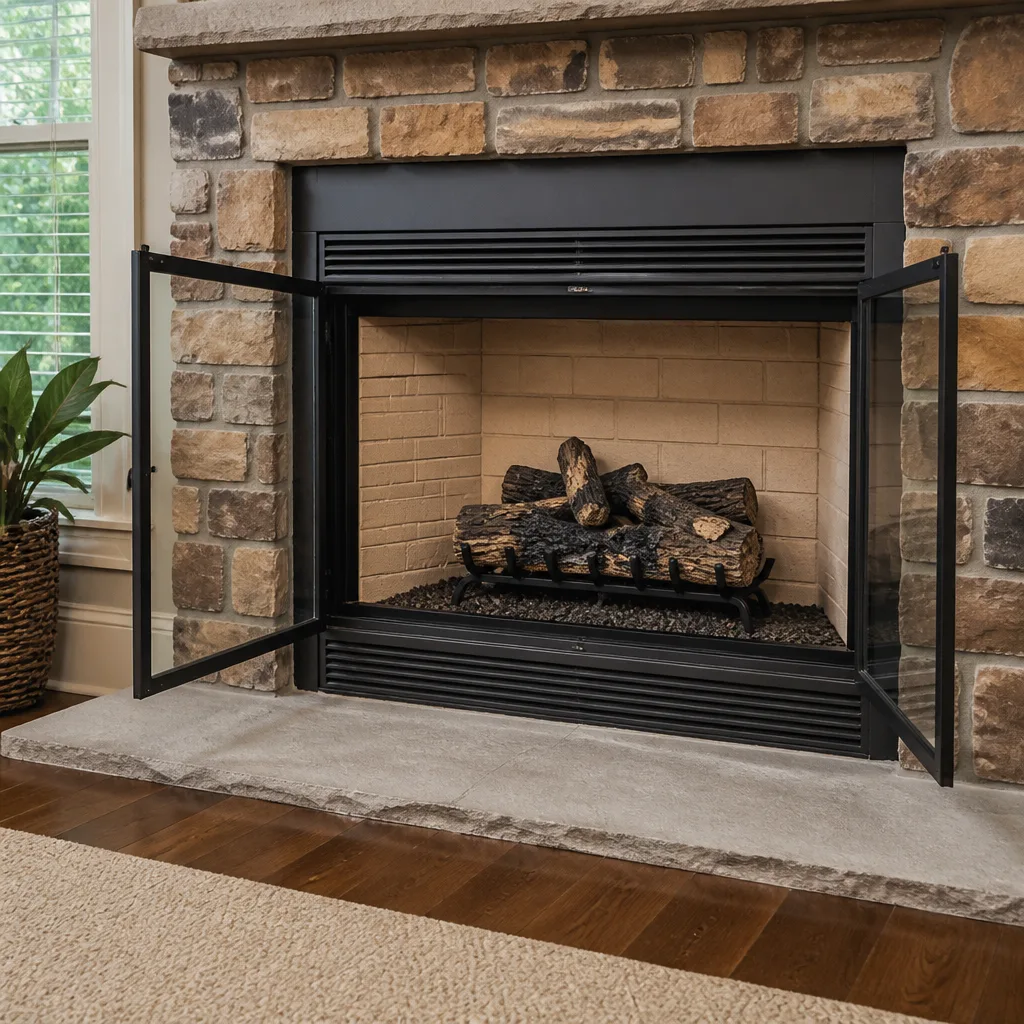
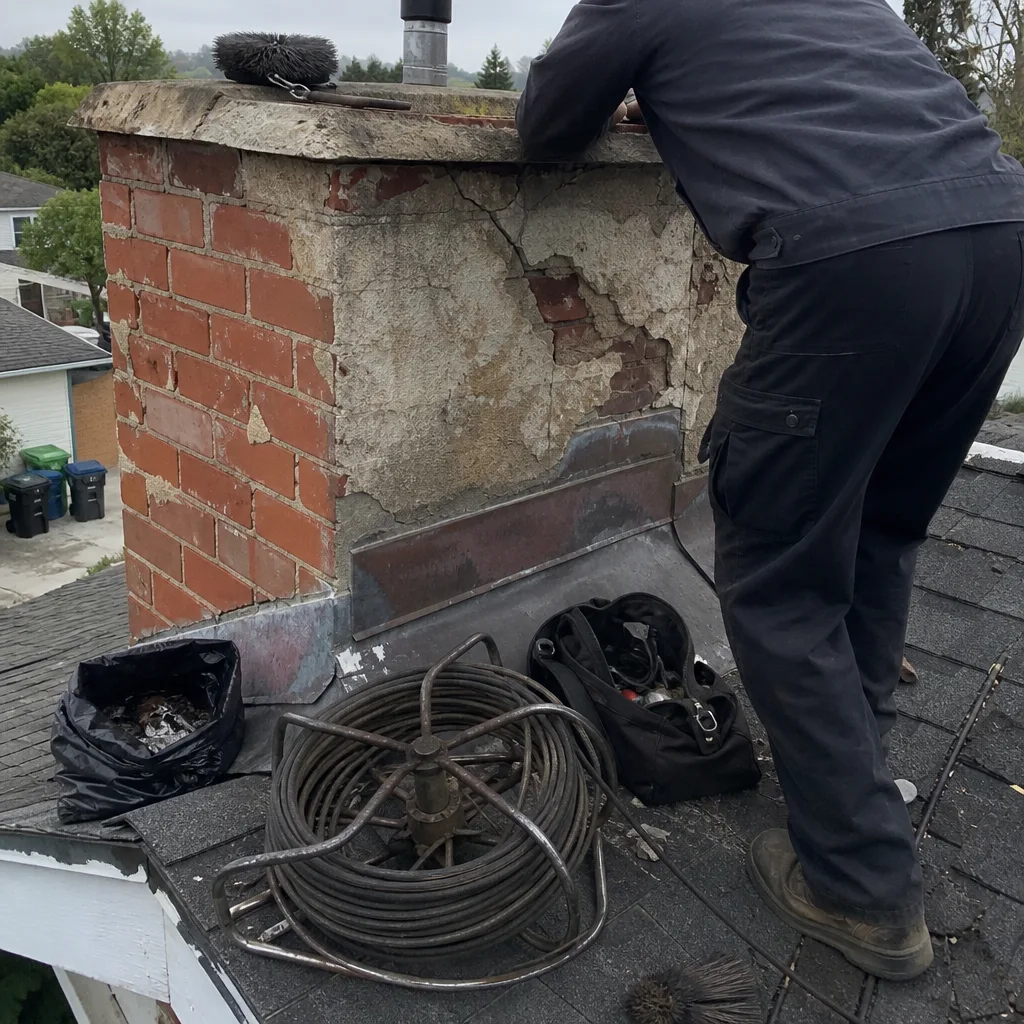 Before
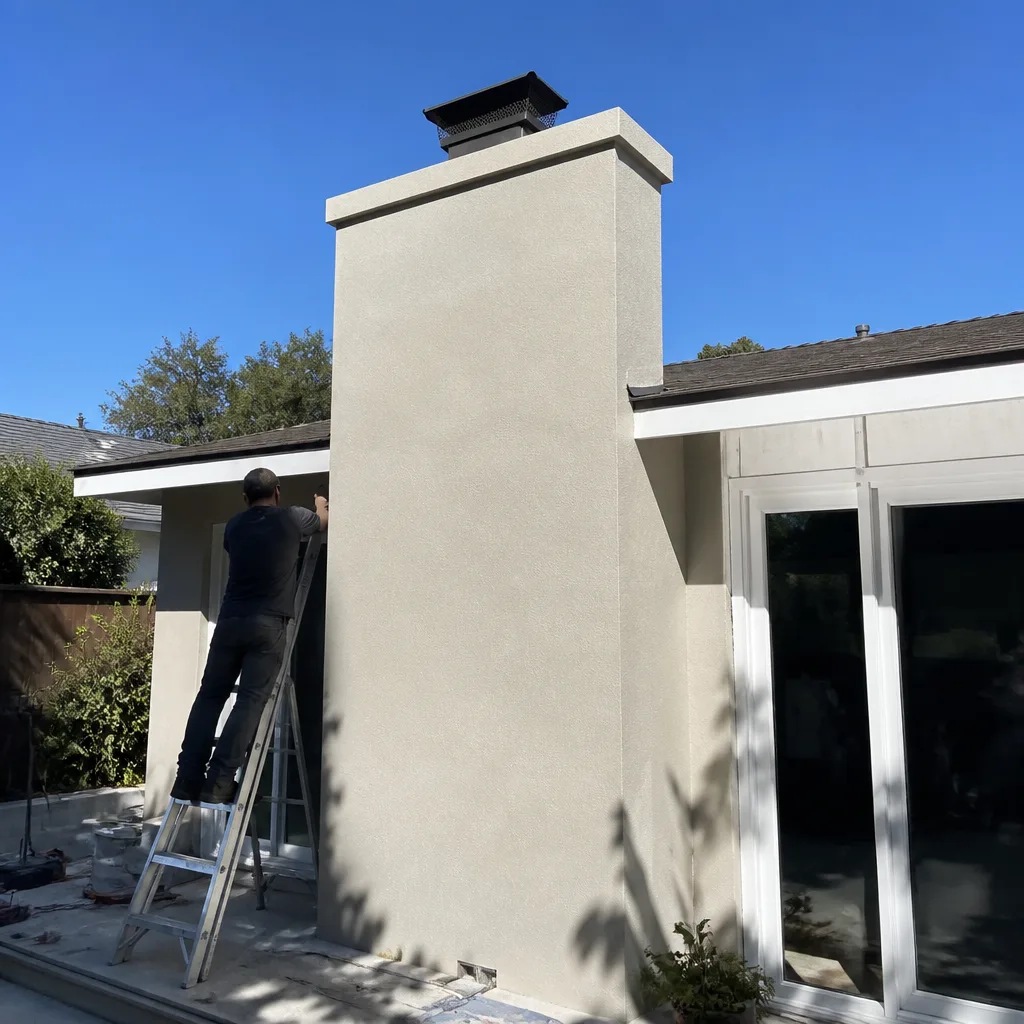 After
After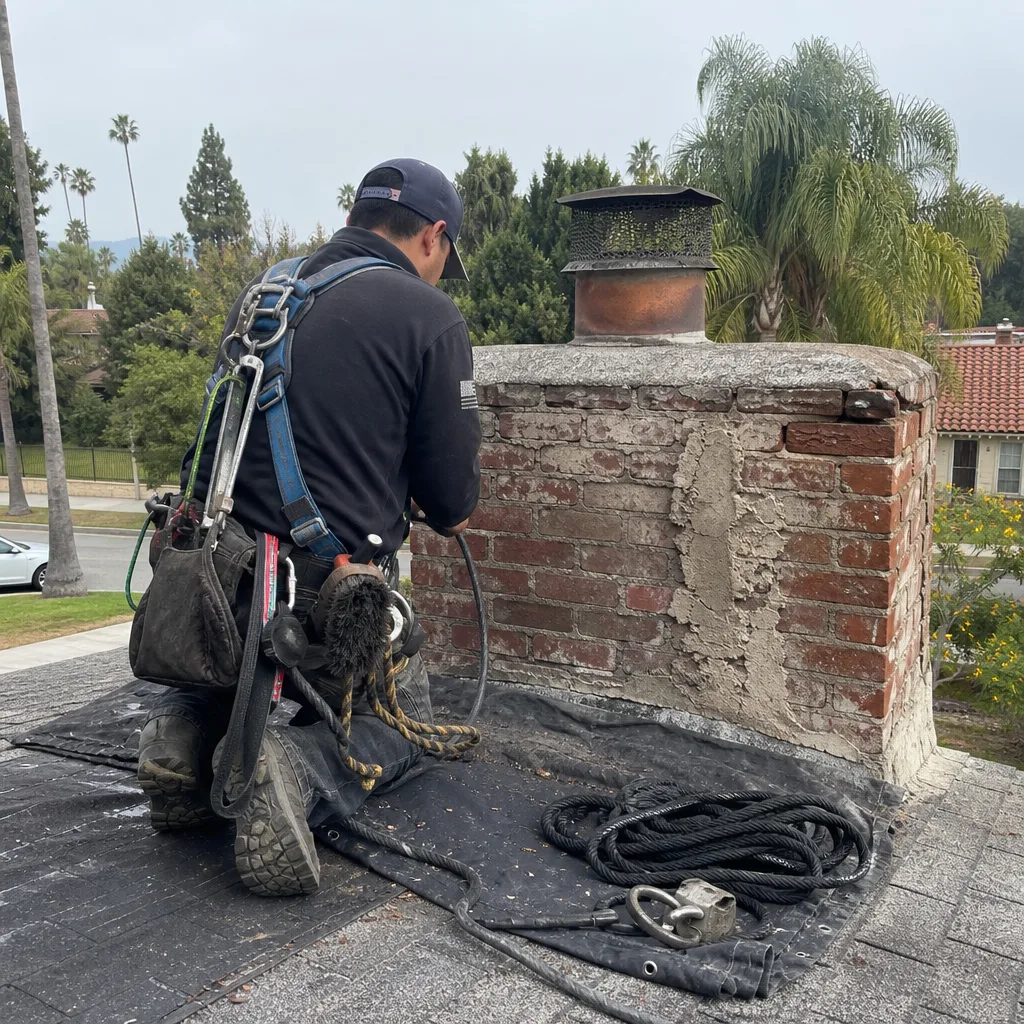 Before
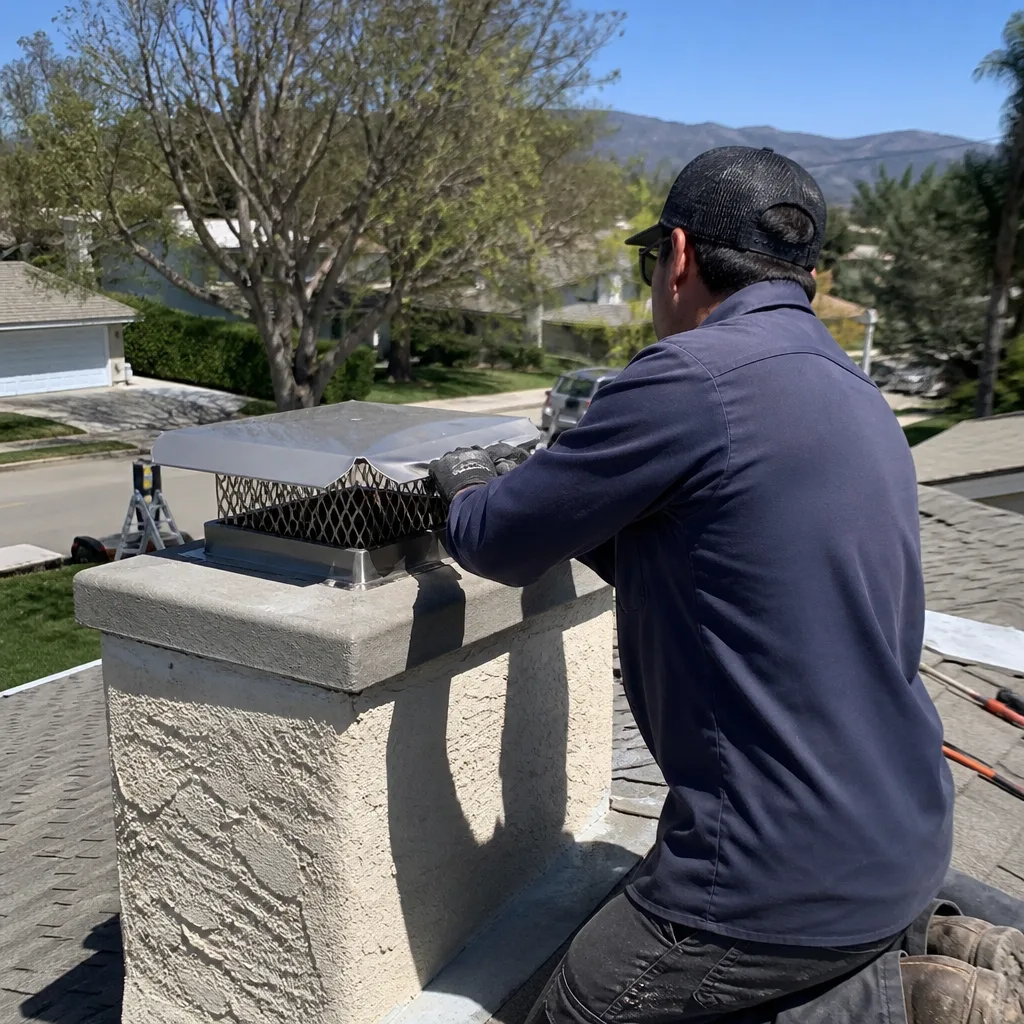 After
After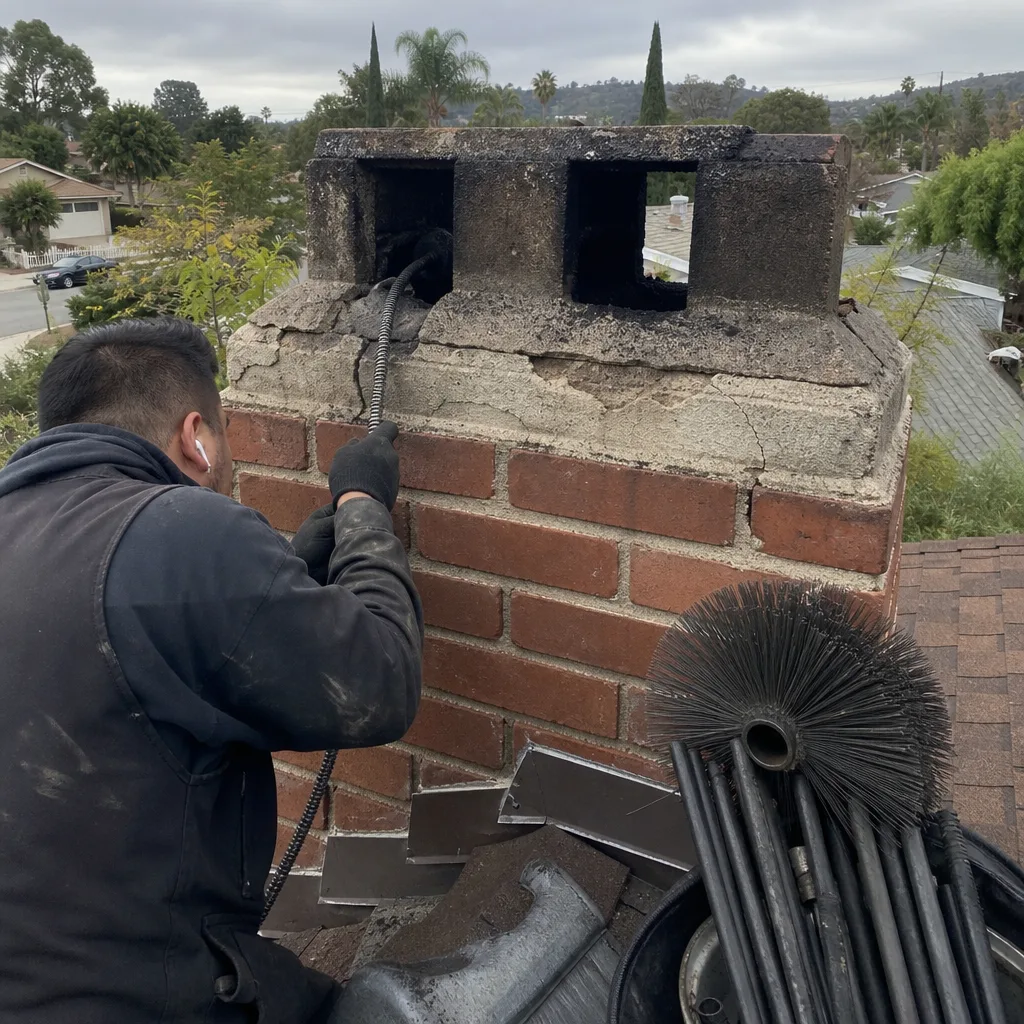 Before
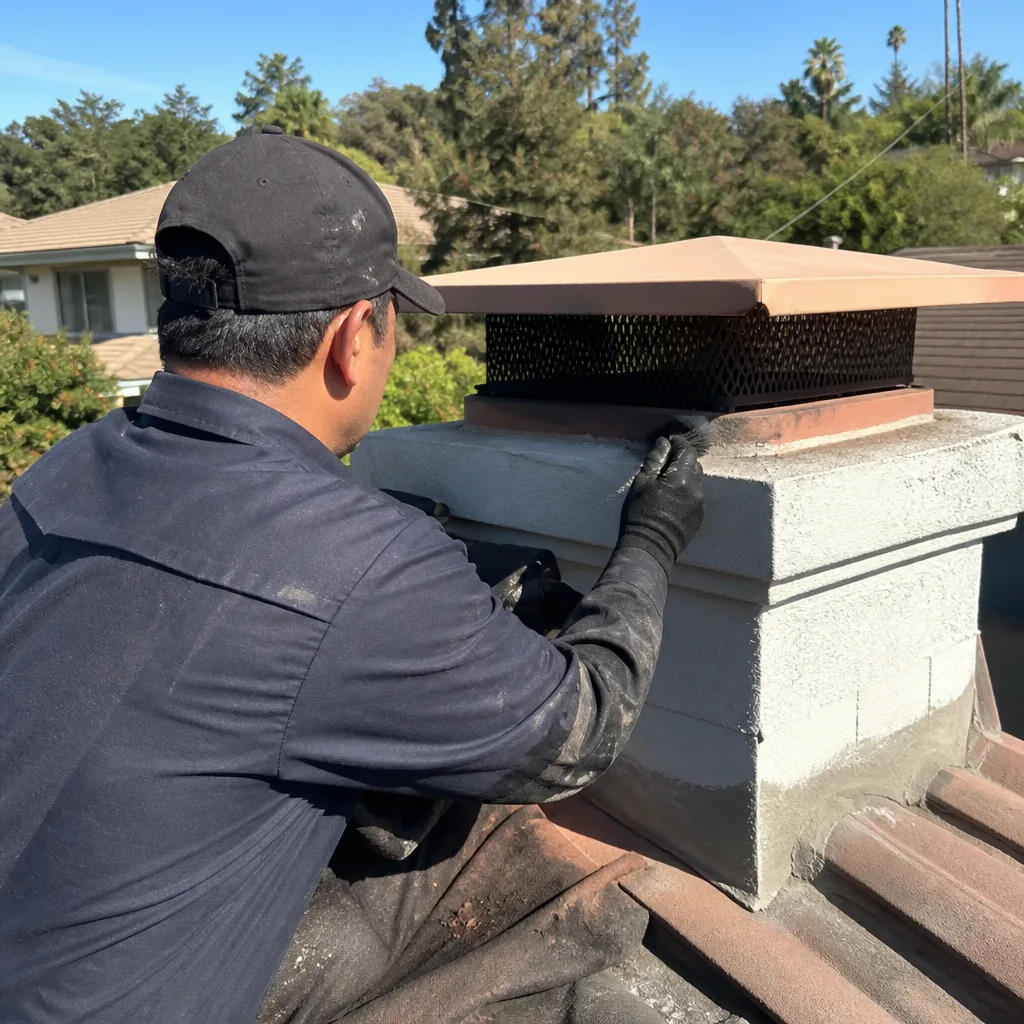 After
AfterChimney Cleaning & Sweep Maintenance Checklist for Pasadena Homeowners
Most chimney checklists online were drafted for Massachusetts or Vermont, where fireplaces sit cold for six months and creosote hardens into something you can chip out with a screwdriver. Pasadena doesn’t work that way. Our fire season runs November through January, then again in dry spells when Santa Ana winds push burn restrictions into March. Eucalyptus and oak, the two most common fuel sources in Pasadena hearths, deposit creosote at different rates and temperatures than Eastern hardwoods. And the freeze-thaw cycling in the San Gabriel foothills, where Pasadena’s northern neighborhoods sit, cracks chimney crowns faster than coastal California codes account for. This guide gives you a room-by-room, component-by-component checklist built for Pasadena’s actual conditions, with a “proof column” for every item so you know what evidence to demand.
Quick Answer
A complete chimney maintenance checklist for Pasadena homeowners covers six zones: firebox, smoke chamber, flue liner, crown and cap, exterior masonry, and spark arrestor. For professional help with any of these, see our Chimney Cleaning & Sweep services. Each item should produce verifiable evidence - photos, readings, or written notes - not just a technician’s verbal report. In Pasadena’s climate, with year-round ignition risk and Santa Ana wind events, inspections should happen annually for gas and every cord of wood burned for solid fuel.
Table of Contents
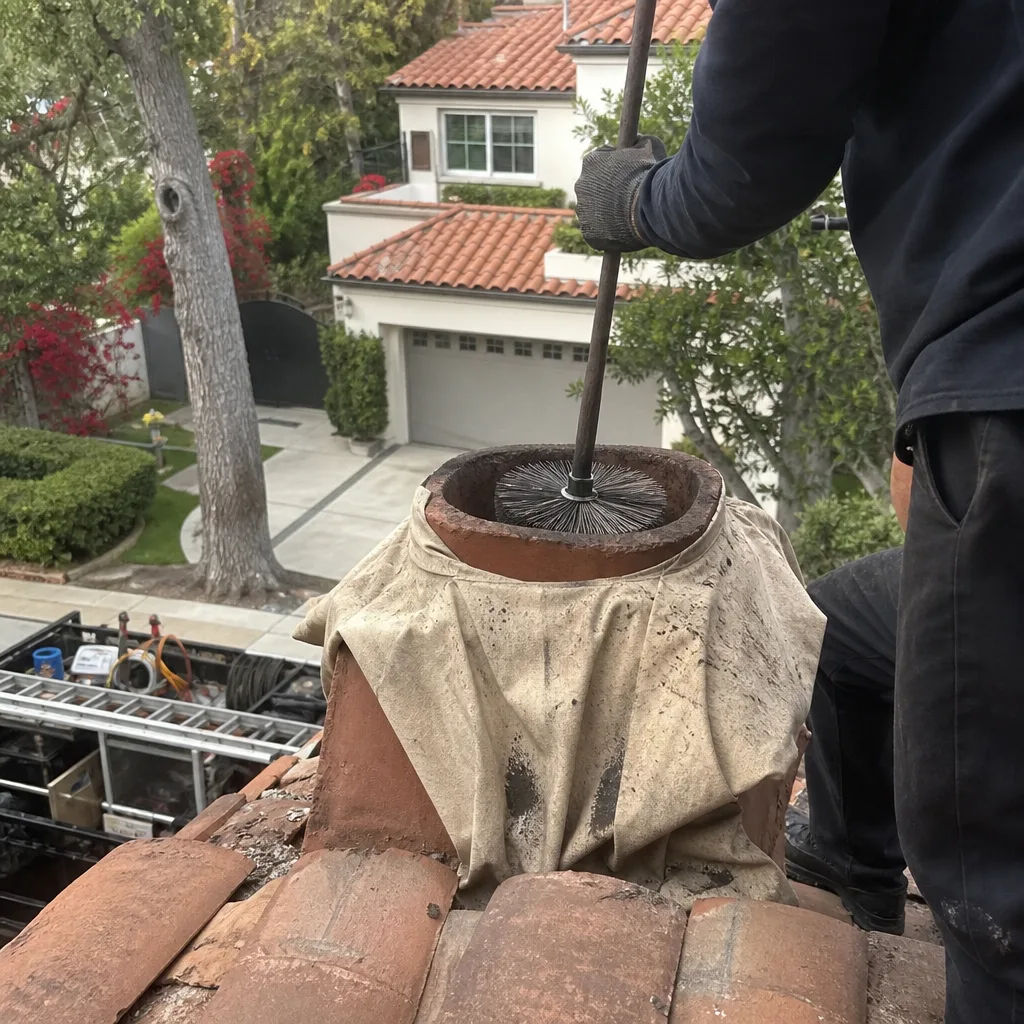
- Why Standard Checklists Fail in Pasadena
- The Room-by-Room Checklist with Proof Column
- Seasonal Triggers: When to Inspect What
- Fuel Type and Inspection Frequency
- Using This Checklist as a Vendor Comparison Tool
- The Post-Service Sign-Off You Should Request
- Common Mistakes to Avoid
- When to Call a Professional
- Frequently Asked Questions
BeforeAfterWhy Standard Checklists Fail in Pasadena
The checklists you’ll find on national chimney websites assume a single cold season, hard freezes, and maple or birch as the default fuel. Pasadena violates all three assumptions.
Our heating season is short but intense. Most Pasadena homeowners light fires between Thanksgiving and mid-February, with occasional cold snaps in March. That concentrated use means creosote builds rapidly in a narrow window, then sits through warm months when humidity fluctuations can change its chemical composition. Class III glazed creosote, the hardened, tar-like deposit that causes chimney fires, forms more readily when flue temperatures swing between cold nights and warm days - exactly what happens in Pasadena’s transitional seasons. Learn to spot these risks early in our Chimney Cleaning Warning Signs: A Pasadena Homeowner’s Reference Guide.
The fuel mix matters too. Oak, widely available from local tree services after wind events, burns hotter and cleaner than pine but still deposits acidic residue. Eucalyptus, common in Pasadena’s older neighborhoods and often free for the taking after city trimming, burns fast and hot with higher oil content that leaves sticky, flammable deposits. Manufactured logs, popular in condos and townhomes from Old Town to the Playhouse District, burn predictably but leave distinct ash patterns that technicians sometimes misread as liner damage.
Finally, the San Gabriel foothills microclimate. Altadena-adjacent neighborhoods and those above the 210 freeway see more freeze-thaw cycles than the flatlands below. A crown that lasts a decade in San Marino may crack in five years near Eaton Canyon. Standard checklists don’t account for this gradient.
What we’ve learned from 38,000 inspections: Pasadena chimneys fail in predictable, local ways. The checklist below targets those failures and names the evidence that proves they were caught.
The Room-by-Room Checklist with Proof Column
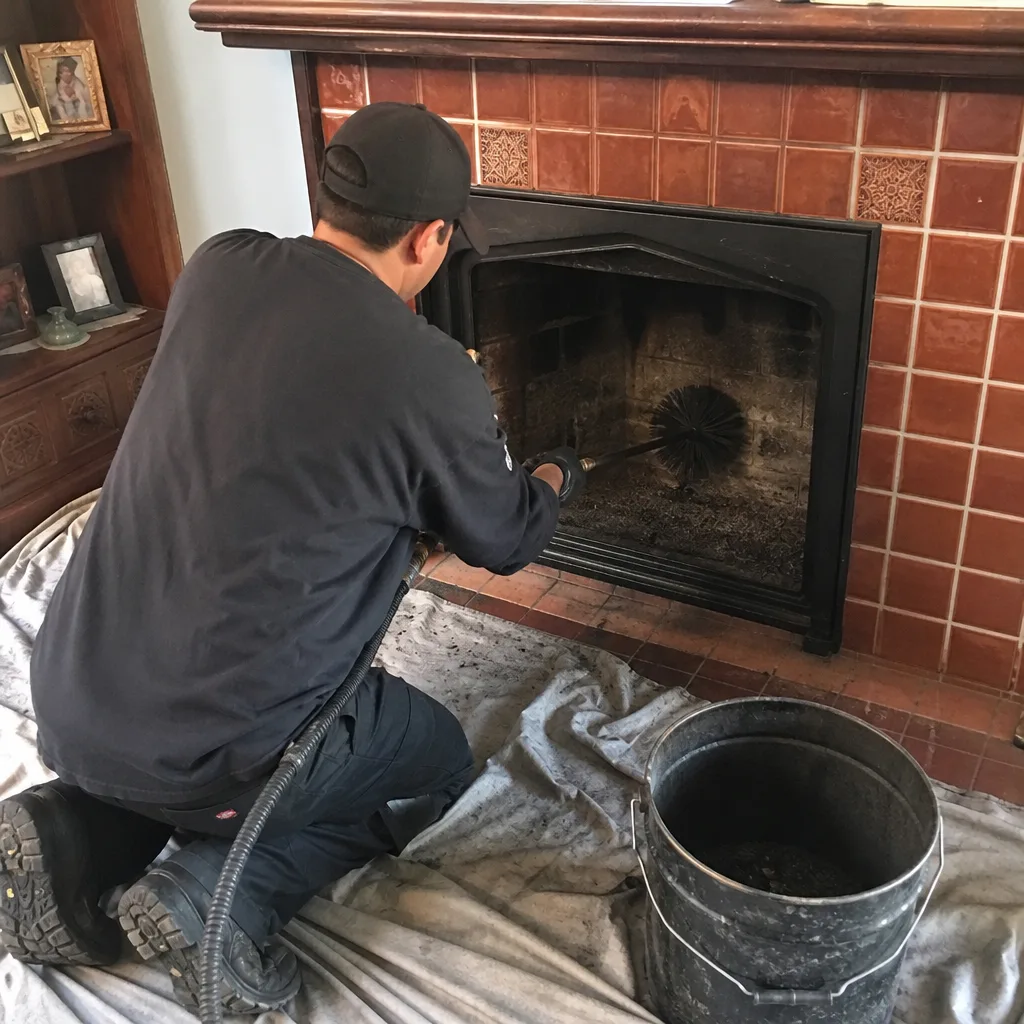
This checklist is organized by location, not by priority. Every item includes what to check, why it matters in Pasadena, and what proof to request.
Firebox
| Check | Why in Pasadena | Proof to Request |
|---|---|---|
| Refractory panel condition (cracks, gaps, spalling) | Gas log sets in Pasadena condos cycle on/off frequently, causing thermal shock to panels | Close-up photo of each panel; measurement of any crack longer than 1/8 inch |
| Firebrick mortar joints | Earthquake county; mortar loosens with seismic micro-movements | Photo of worst joint; probe depth reading if loose |
| Grate and ash dump operation | Santa Ana winds blow fine ash backward through poorly sealed dumps | Photo of ash pit from below; note on seal condition |
| Gas line and valve condition (if applicable) | Pasadena’s older housing stock includes unupdated gas connections | Photo of valve and flex line; leak test result (bubble test or electronic) |
Smoke Chamber
| Check | Why in Pasadena | Proof to Request |
|---|---|---|
| Smoke chamber parging (smoothness, coverage) | Corbelling in pre-1970s Pasadena homes creates turbulence that deposits creosote | Camera image from below showing chamber walls; note on parging condition |
| Clearance to combustibles | Many Pasadena bungalows have modified framing near the chimney breast | Measurement photo with ruler visible; written clearance note |
| Damper operation and seal | Year-round temperature swings warp dampers; energy loss is significant in mild climate | Video of damper opening/closing; light test for seal (daylight visible = leak) |
Flue Liner
| Check | Why in Pasadena | Proof to Request |
|---|---|---|
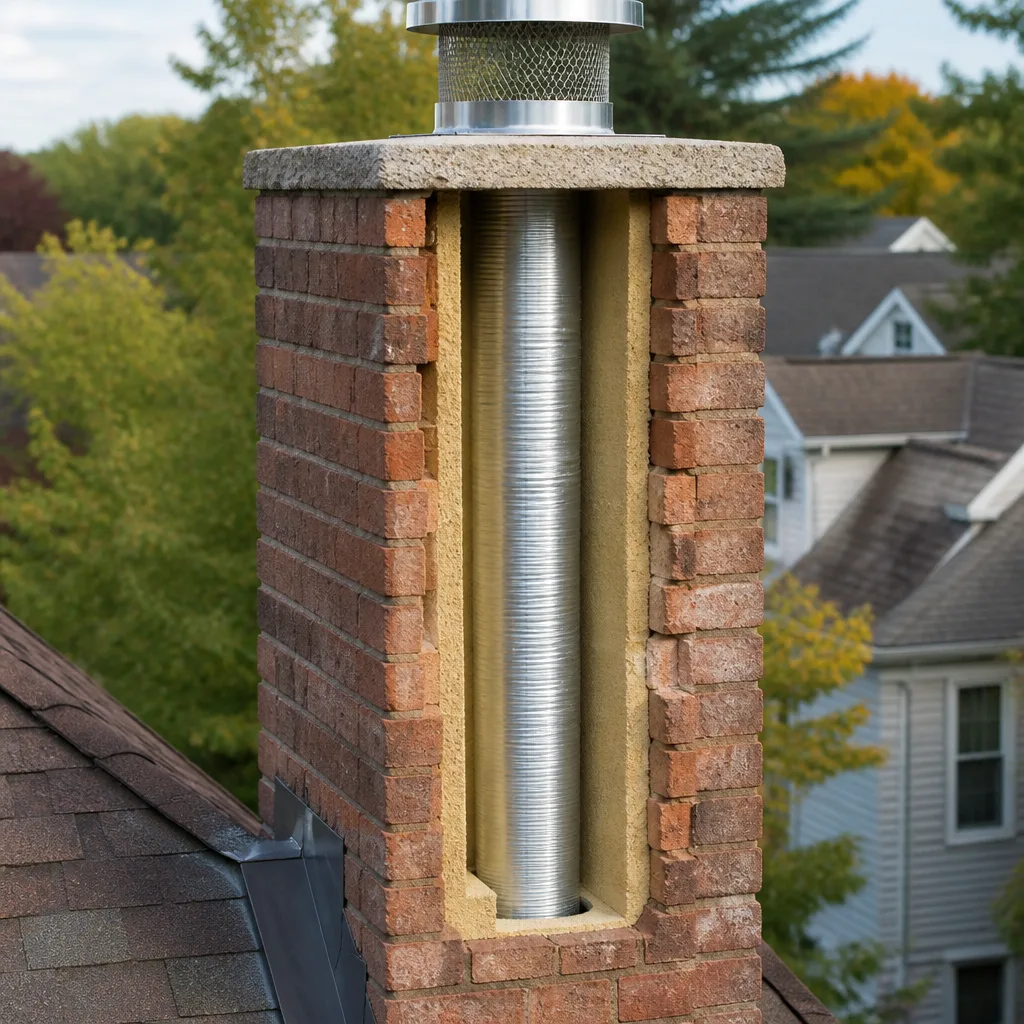
| Liner integrity (cracks, gaps, deterioration) | Clay tile liners in 1920s-1950s Pasadena housing stock deteriorate from thermal cycling | Full-length camera scan video; still image of every joint and any defect |
| Creosote class and thickness | Oak and eucalyptus produce different creosote types; misidentification leads to wrong cleaning method | Written creosote classification (Class I, II, or III); thickness measurement at worst point |
| Liner sizing vs. appliance output | Retrofitted gas inserts in original Pasadena fireplaces often have mismatched liner diameters | Written liner dimension; appliance BTU rating; note on NFPA 211 compliance |
The flue liner inspection is where Chimney Cleaning & Sweep in Pasadena most often reveals hidden problems. We’ve found cracked clay tiles in homes from Bungalow Heaven to the Linda Vista area where the homeowner had no indication of trouble until the camera went down.
Crown and Cap
| Check | Why in Pasadena | Proof to Request |
|---|---|---|
| Crown integrity (cracks, wash slope, overhang) | Freeze-thaw in foothill neighborhoods; poor original construction in 1960s-1980s builds | Photo from roof level; crack width measurement; water pooling note |
| Cap condition (rust, mesh integrity, fit) | Spark arrester mesh must meet California fire code for wildland-urban interface zones | Photo of mesh gauge; note on rust percentage; measurement of gap between cap and flue |
| Flue gas clearance at cap | Down-drafting during Santa Ana wind events | Photo showing flue termination height vs. roof plane; written clearance dimension |
Exterior Masonry and Flashing
| Check | Why in Pasadena | Proof to Request |
|---|---|---|
| Brick/spalling condition | Moisture from rare heavy rains (January atmospheric rivers) enters micro-cracks, freezes in foothills | Photo of worst spall; depth measurement if surface is crumbling |
| Flashing integrity (step, counter, cricket) | Pasadena’s clay tile roofs require specialized flashing; generic repairs leak | Photo of each flashing type; water test result if accessible |
| Chase cover (factory-built chimneys) | Common in 1970s-1990s Pasadena tract homes; rust-through is endemic | Photo of rust pattern; thickness measurement at thinnest point |
Spark Arrestor and Fire-Specific Items
| Check | Why in Pasadena | Proof to Request |
|---|---|---|
| Spark arrestor mesh gauge and condition | California fire code requires specific mesh for wildland-urban interface; Pasadena has WUI zones | Photo with mesh gauge visible; note on percentage of openings clogged |
| Clearance to vegetation | Pasadena Fire Department defensible space requirements apply | Photo showing 10-foot clearance zone; note on overhanging branches |
| Chimney height relative to roof and ridge | Down-drafting in canyon neighborhoods (Annandale, San Rafael) | Photo from ground showing termination height; written dimension vs. 3-2-10 rule |
Seasonal Triggers: When to Inspect What
Pasadena’s climate demands a different rhythm than four-season regions. For a deeper dive, read The Complete Guide to Chimney Cleaning in Pasadena. Here’s what to do and when, based on what we’ve observed across 15 years of local service.
September-October: Pre-Season Inspection
Schedule your full Level 2 inspection before the first cold night creates demand backlog. In Pasadena, that means September for most homeowners, October at the latest. The inspection should cover every item in the checklist above. This is also when to address repairs; masonry work and liner replacements need cure time before first fire.
Specific Pasadena note: Check your spark arrestor after summer. Dry months pack dust and pollen into mesh; September Santa Ana winds can deposit debris that restricts draft.
November-January: Active Burning Season
Monitor for these signs between burns:
- Smoke spillage at startup (indicates cold flue or blockage)
- Unusual odors (moisture in system, or creosote overheating)
- Reduced draft on windy days (cap or arrestor issue)
- Visible exterior staining below crown (water intrusion during rare rains)
If you burn more than one cord of oak or equivalent, schedule a mid-season sweep. Eucalyptus burns faster; adjust accordingly.
February-March: Post-Season Assessment
The critical but overlooked window. Creosote left in flue through warm months undergoes chemical changes that make next-season removal harder. Schedule cleaning now, when companies have availability and you’re not cold-weather dependent on the fireplace.
Pasadena-specific: February atmospheric rivers can reveal leaks that summer dryness hid. If you noticed any water staining during January rains, document it with photos before the evidence fades.
April-August: Maintenance and Repair Period
Book major work now: crown rebuilds, liner replacements, masonry repairs. Materials cure better in warm, dry conditions. This is also when to address any items flagged in your post-season assessment.
For homes in the San Rafael Hills or near Eaton Canyon, inspect exterior masonry after the first hot spell. Thermal expansion can worsen cracks that winter freeze initiated.
Fuel Type and Inspection Frequency
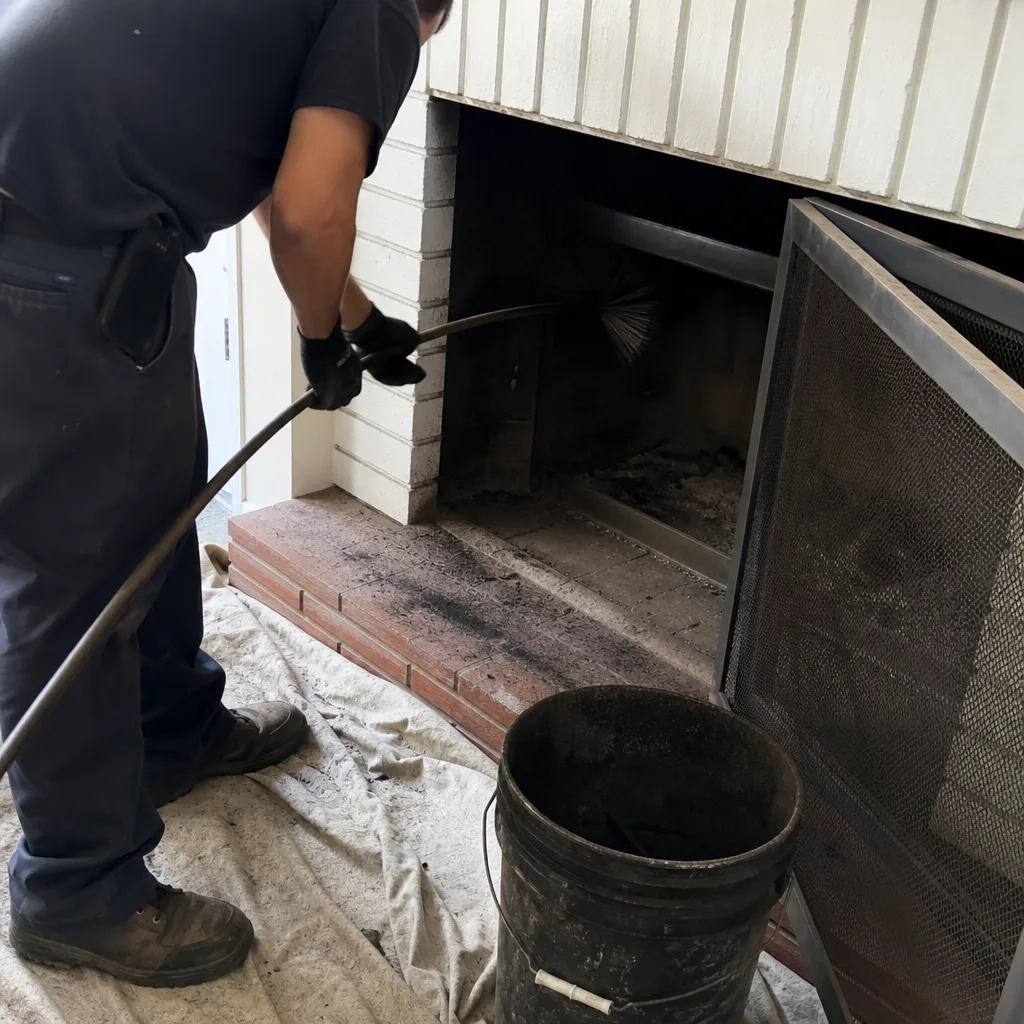
How often you need service depends on what you burn. Here’s the breakdown for Pasadena’s common fuel sources.
| Fuel Type | Inspection Interval | Cleaning Trigger | Pasadena-Specific Note |
|---|---|---|---|
| Natural gas log set | Annually | As needed (minimal creosote, but debris and moisture accumulate) | Most common in condos and townhomes from Old Town to South Lake; vented sets still require flue inspection |
| Seasoned oak (local) | Every cord burned, or annually minimum | 1/8 inch creosote buildup | Oak from Pasadena tree services is often “seasoned” for 6 months, not 12; higher moisture = more creosote |
| Eucalyptus (local, free) | Every 1/2 cord burned | Visible glaze or 1/8 inch buildup | High oil content; burns hot and fast; creosote is stickier and more flammable than oak |
| Manufactured logs (Duraflame, etc.) | Annually | After 40-50 logs burned | Popular in apartments and zero-clearance units; ash is alkaline and corrosive to stainless liners if left |
| Pellet stove | Annually, plus auger/feed system check | Ashes exceed 1 inch in burn pot | Less common in Pasadena but growing; exhaust vent (not true chimney) still needs inspection |
The manufactured log point matters for Pasadena’s newer housing. We’ve inspected units in the Playhouse District and Madison Heights where the homeowner assumed “clean burning” meant “no maintenance.” The alkaline ash residue attacks stainless steel liner connections. Fireplace Services in Pasadena should include this check explicitly.
Using This Checklist as a Vendor Comparison Tool
This is where the proof column becomes practical. Here’s how to use it.
- Print two copies. Give one to each company you’re considering.
- Ask them to check off items and initial the proof column. A technician who balks at documentation is telling you something.
- Compare what each checks versus skips. We’ve seen competitors skip smoke chamber inspection entirely, or glance at the crown from the driveway.
- Request the actual evidence. Photos should be timestamped. Camera video should cover the full flue length, not just the top third where it’s easy to reach.
- Ask for written price before work starts. This is Haven Standard Clause 1. If they can’t commit in writing, the inspection isn’t the only thing they’ll improvise.
What to watch for: Technicians who conflate “inspection” with “sweep.” A sweep removes deposits. An inspection evaluates condition. They can happen on the same visit, but they’re separate procedures with separate documentation. If your quote bundles them without itemization, ask for breakdown.
Also watch for verbal recommendations without photo evidence. “You need a new liner” should be accompanied by camera footage of the damage, a written explanation of why repair isn’t viable, and a quote with material specifications. We use DuraFlex and Olympia Chimney liners in Pasadena installations; if a competitor specifies a different brand, ask why and request the spec sheet.
The Level Two Chimney Pasadena home page lists our full inspection standard. Use it as a benchmark.
The Post-Service Sign-Off You Should Request
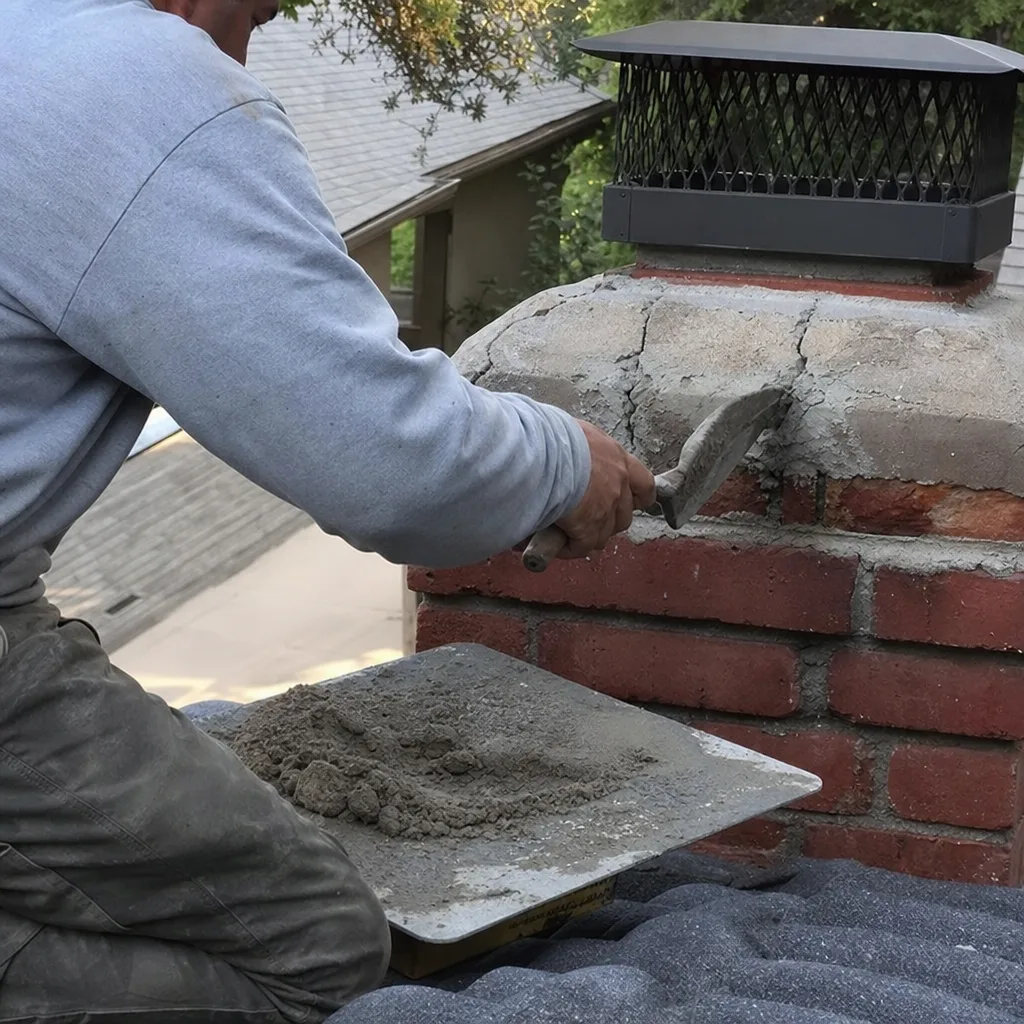
After service, you should receive a packet that includes:
- Itemized checklist with technician initials on each checked item
- Timestamped photos or video of inspection findings
- Written scope of any recommended work, with priority ranking
- Written price for recommended work, valid for a stated period
- Documentation of work performed (sweep, repair, installation)
- Warranty terms in writing
Request that the technician date and initial the checklist itself. This creates a simple accountability record. If issues arise later, you have a named individual and date. In 15 years, we’ve found this practice prevents disputes more effectively than any contract language.
Clause 4 of the Haven Standard requires a photo record on every job. This isn’t optional documentation; it’s the standard we established in 2009 and have maintained through 38,000 visits. Your sweep company should have an equivalent practice, or you should understand why they don’t.
Store these records with your home maintenance files. They matter for insurance claims, property sales, and warranty enforcement. A documented maintenance history adds value in Pasadena’s competitive real estate market.
Common Mistakes to Avoid
- Assuming gas fireplaces need no inspection. Vented gas logs produce moisture and corrosive residues; vent-free units affect indoor air quality. Annual inspection catches deteriorated connections before they leak.
- Burning unseasoned oak from recent tree work. Pasadena’s tree services often deliver wood within weeks of cutting. Moisture content above 25% doubles creosote production and makes ignition harder. Buy seasoned wood or plan 12 months ahead.
- Ignoring the smoke chamber. This is the most commonly skipped component in competitor inspections. It’s also where many chimney fires start, in the rough corbelled brick of pre-1970s construction common in Pasadena’s older neighborhoods.
- Waiting for visible exterior damage. By the time you see spalling brick or crown cracks from the ground, water has been entering for years. Interior inspection catches this earlier.
- Accepting “everything looks fine” without documentation. Verbal reassurance is not a maintenance record. Demand the proof items in the checklist above.
- Scheduling repairs without a second opinion on major work. Liner replacement and rebuilds are significant investments. Level Two Chimney Pasadena offers free second opinions on any written estimate; use this or an equivalent resource.
- Neglecting post-Santa Ana inspection. Wind events in Pasadena deposit debris, dislodge caps, and force downdrafts that can damage dampers. Check exterior components after significant wind.
When to Call a Professional
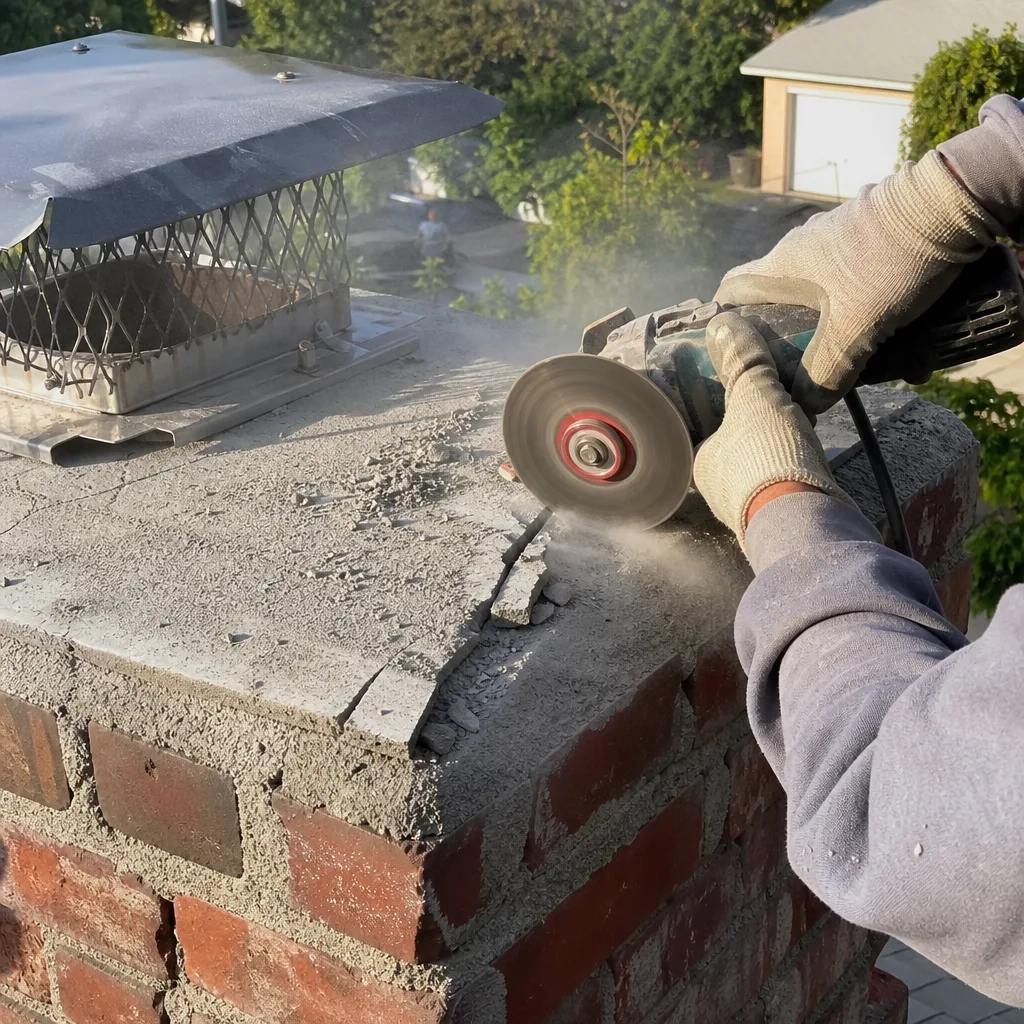
Call for inspection if you notice smoke spillage, unusual odors, visible exterior damage, or if it’s been more than 12 months since your last service. Call immediately if you suspect a chimney fire (loud cracking, dense smoke, intense heat from masonry) or carbon monoxide symptoms (headache, nausea, confusion while fireplace is operating).
Call before you need emergency service. The busiest weeks for Pasadena chimney companies are the first cold snaps in November and December. Scheduling in September or February gets you thorough attention and flexible timing.
Level Two Chimney Pasadena offers free estimates in Pasadena. We’re independently owned and operated under the Haven Standard, with background-checked, uniformed technicians and live phone support 24 hours a day, 7 days a week. Call (213) 459-6058 to schedule, or bring us any competitor’s written quote for a free second opinion.
Frequently Asked Questions
A standard chimney sweep in Pasadena typically runs $180 to $280 for a single flue with basic access, while a Level 2 inspection with camera scan ranges from $280 to $420 depending on flue count and roof accessibility. We deliver a written price before any work starts, with no exceptions. Call (213) 459-6058 for an exact quote; estimates are free.
Gas fireplaces need annual inspection; wood-burning systems need sweeping every cord of seasoned oak burned, or every half-cord of eucalyptus. In Pasadena’s climate, with year-round ignition risk and concentrated winter use, annual minimums apply regardless of fuel type. The NFPA 211 standard, which we follow, establishes these baselines.
Clay tile liners with isolated cracks can sometimes be repaired with HeatShield cerfractory sealant; widespread deterioration or shifting usually requires stainless steel replacement. We don’t recommend either without camera evidence you can review yourself. If a competitor proposes replacement, ask for the video and bring it to us for a free second opinion.
Skipped maintenance leads to three predictable outcomes: creosote accumulation increases chimney fire risk; moisture intrusion degrades masonry and liner; and minor damage (crown crack, loose flashing) becomes major repair. In Pasadena’s wildland-urban interface zones, spark arrestor failure also creates liability for fire spread. The cost of prevention is consistently lower than the cost of remediation.
A Level 1 inspection is visual, from accessible areas, without tools. A Level 2 inspection includes camera scan of the flue interior, accessible portions of the smoke chamber, and examination of attic and crawl space clearances where reachable. In Pasadena’s older housing stock, with clay tile liners and modified framing, Level 2 is the appropriate standard for any real estate transaction, change of appliance, or suspected damage. We’ve performed Level 2 inspections as our default since 2009.
DIY brush cleaning of a straight, short flue is physically possible but rarely advisable. You cannot inspect the liner interior without a camera. You cannot evaluate smoke chamber condition from below. And in Pasadena’s earthquake zone, you may miss shifted tiles or compromised clearances that only professional inspection reveals. For safety and documentation, professional service is the sound choice.
The Bottom Line
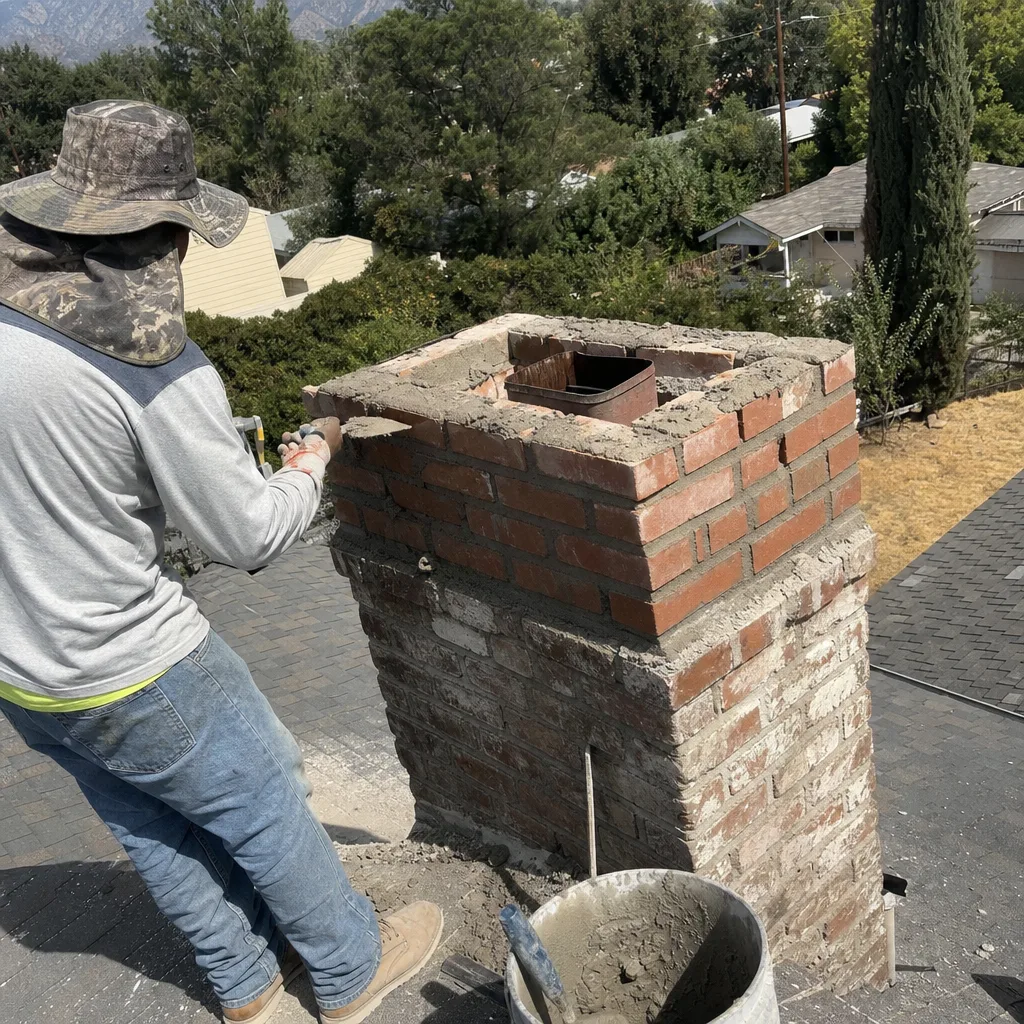
A chimney maintenance checklist is only as good as the evidence it produces. For more guides & resources, visit our blog. For Pasadena homeowners, that means documentation adapted to local fuel types, local climate stressors, and local fire risk. Use the proof column in this guide to hold any sweep company accountable, including ours. Store your records. Schedule preseason. And never accept a recommendation you can’t see for yourself.
Written by Corrine Halstead, Owner at Level Two Chimney Pasadena, serving Pasadena since 2009.