
Last updated September 22, 2026
Level 1 sweep and inspection to the NFPA 211 annual standard - flue, crown, cap, and flashing checked and photographed
Chimney sweep logs do not sweep chimneys. They loosen some creosote - which then falls where a brush and vacuum still have to collect it.
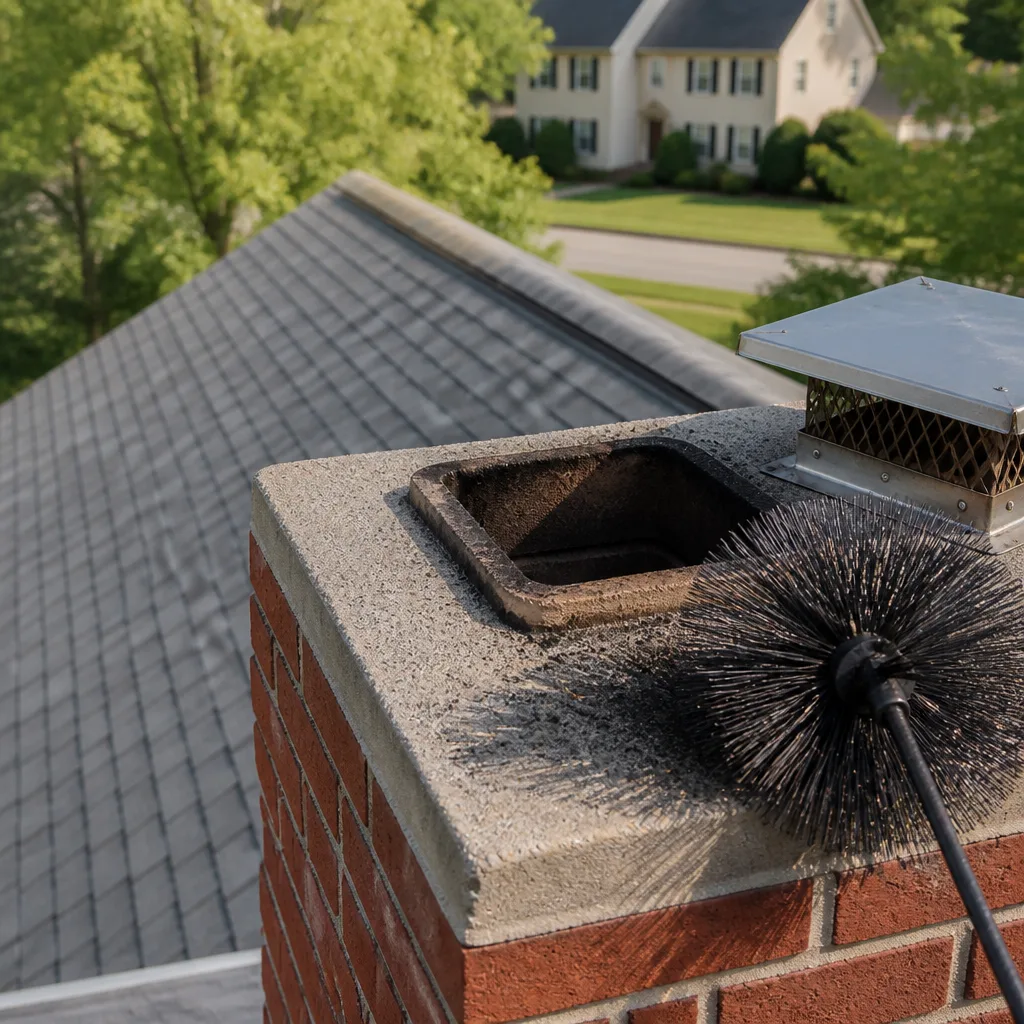
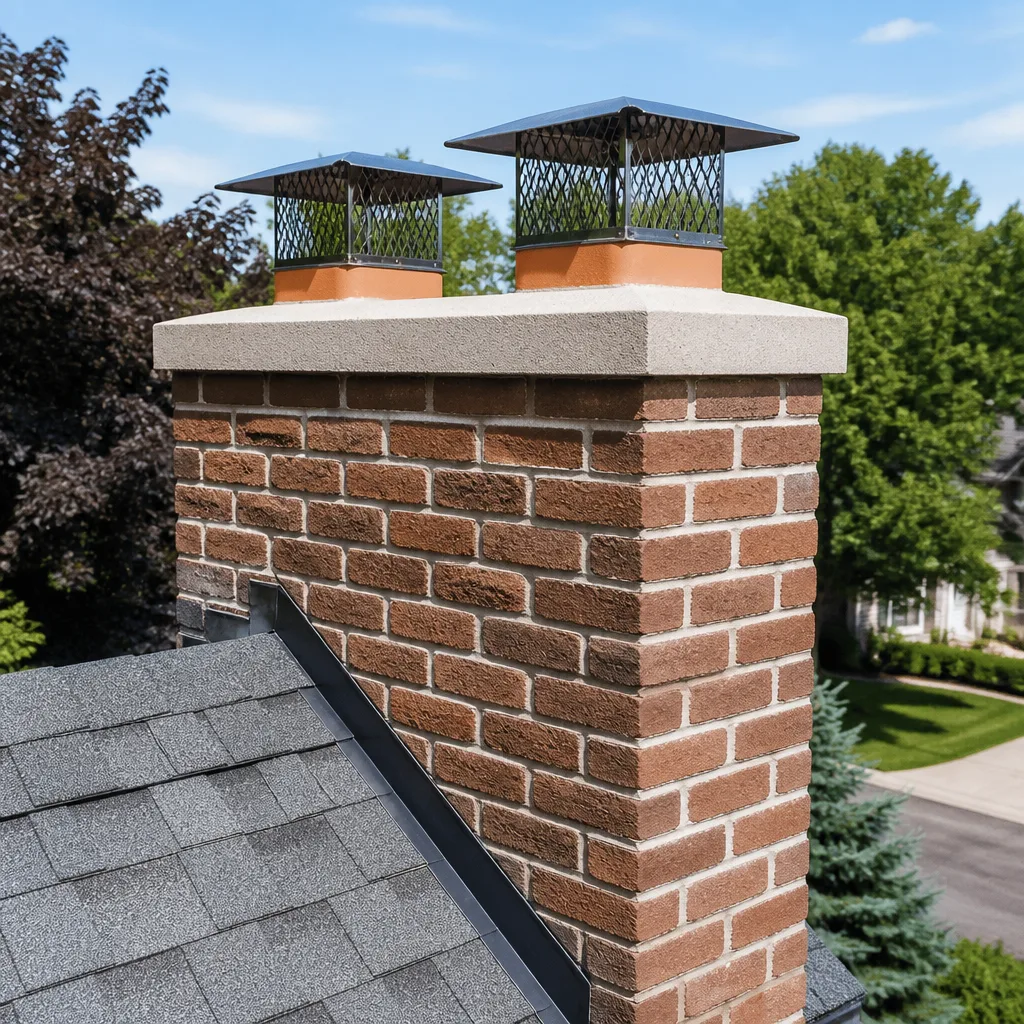
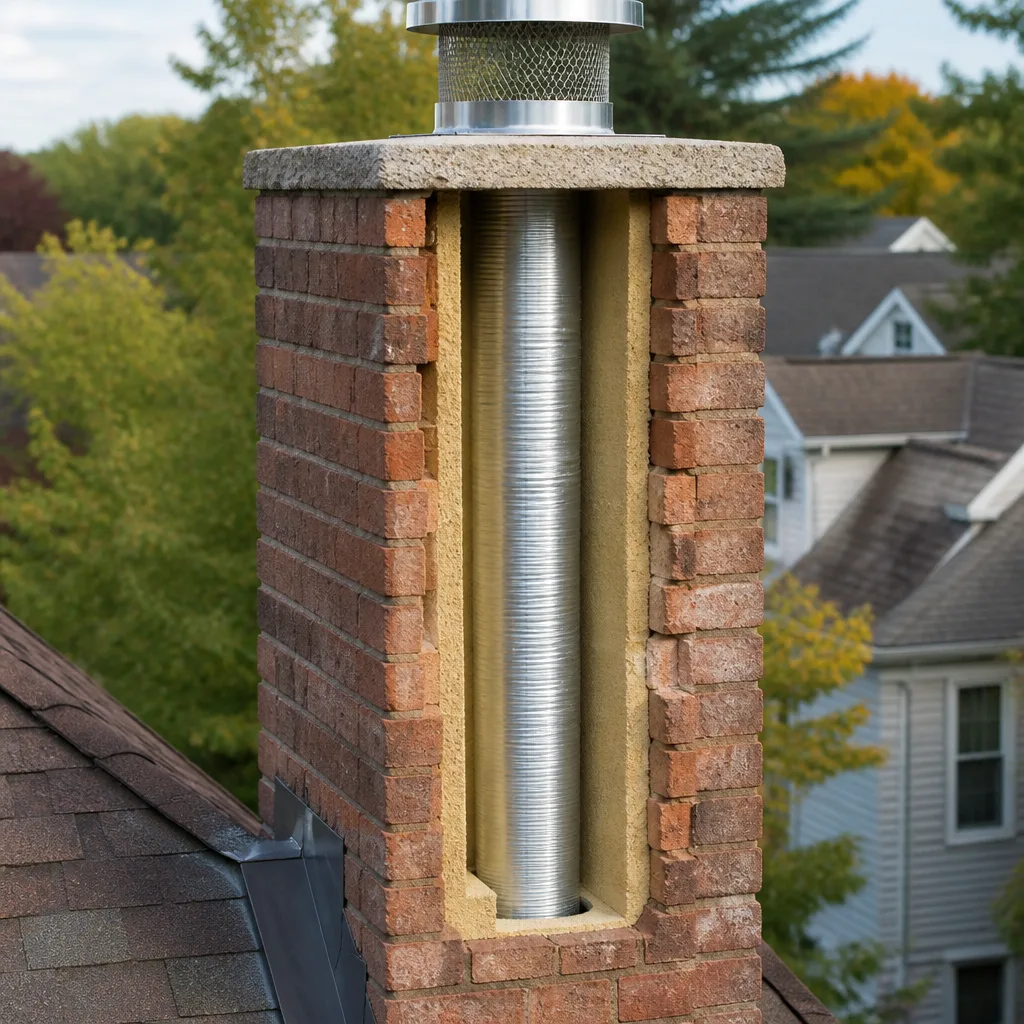
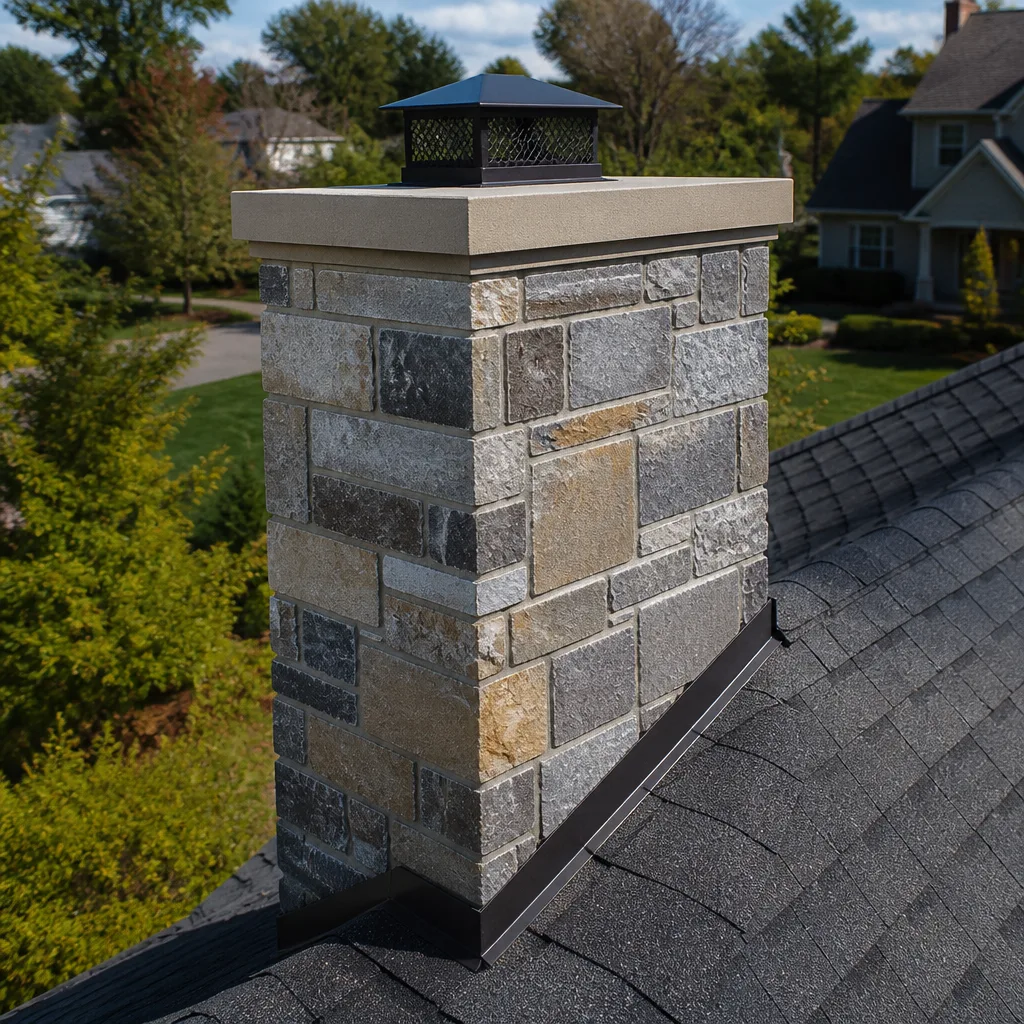
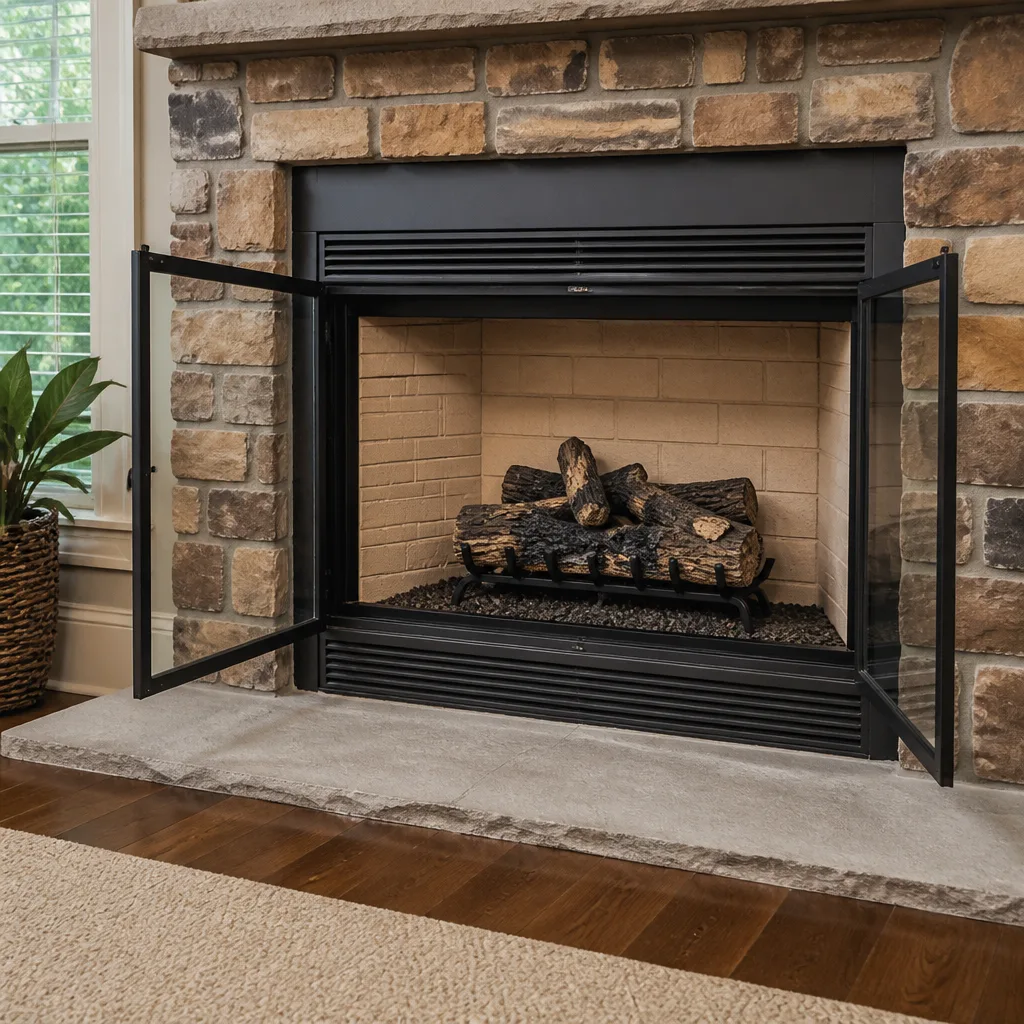
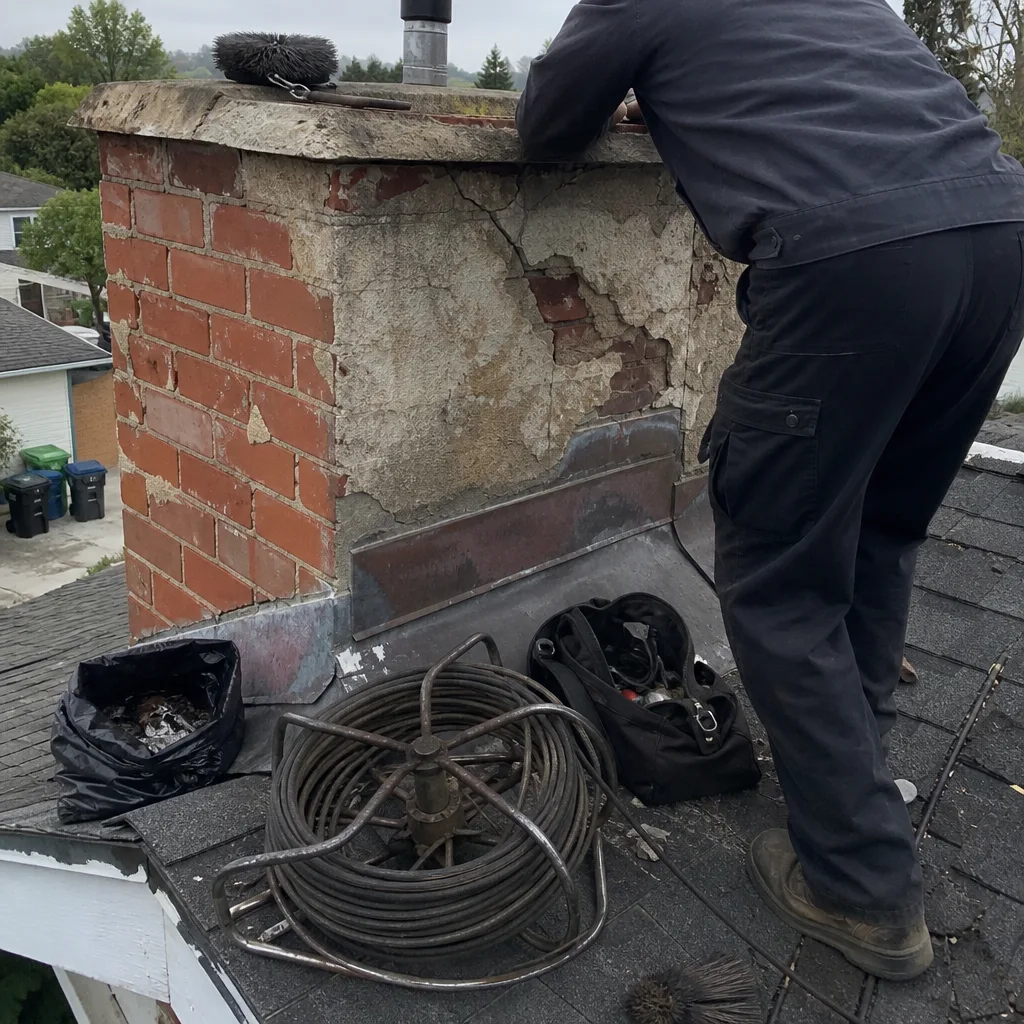 Before
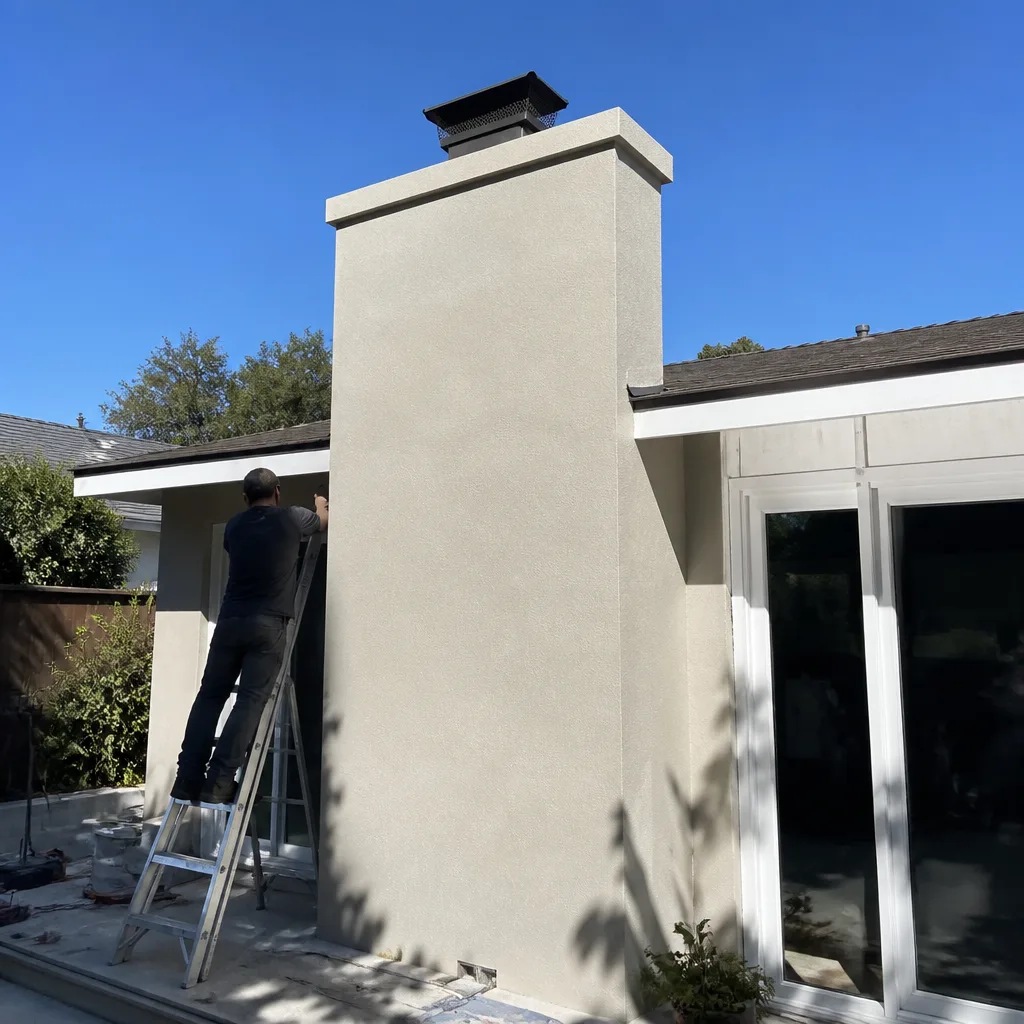 After
After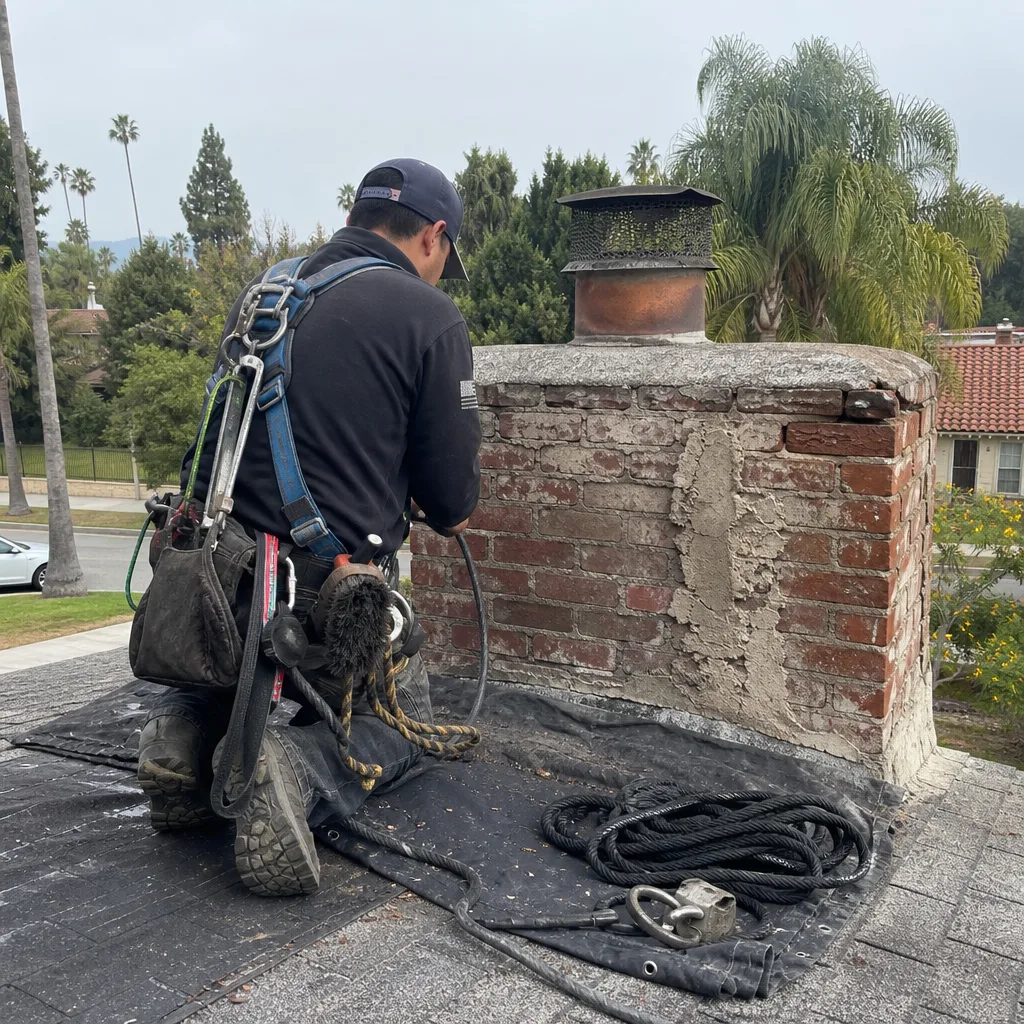 Before
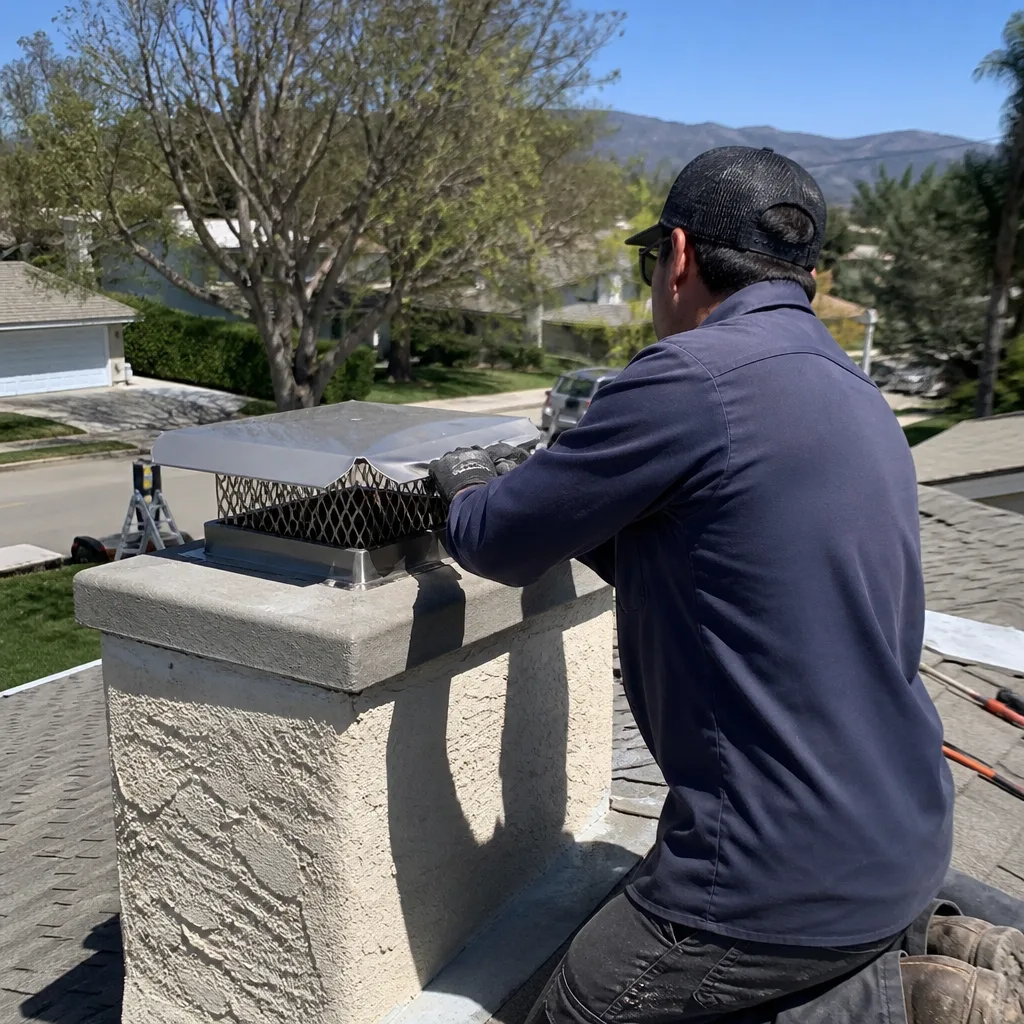 After
After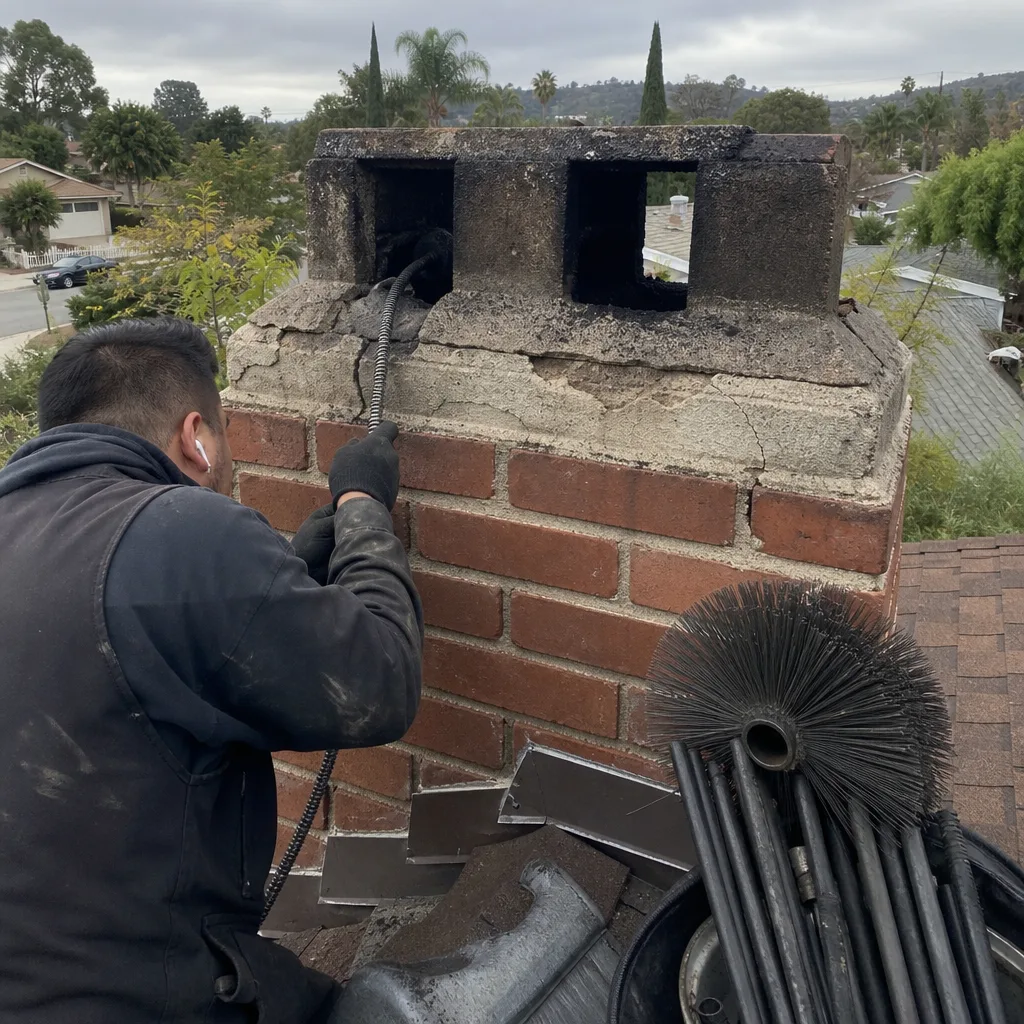 Before
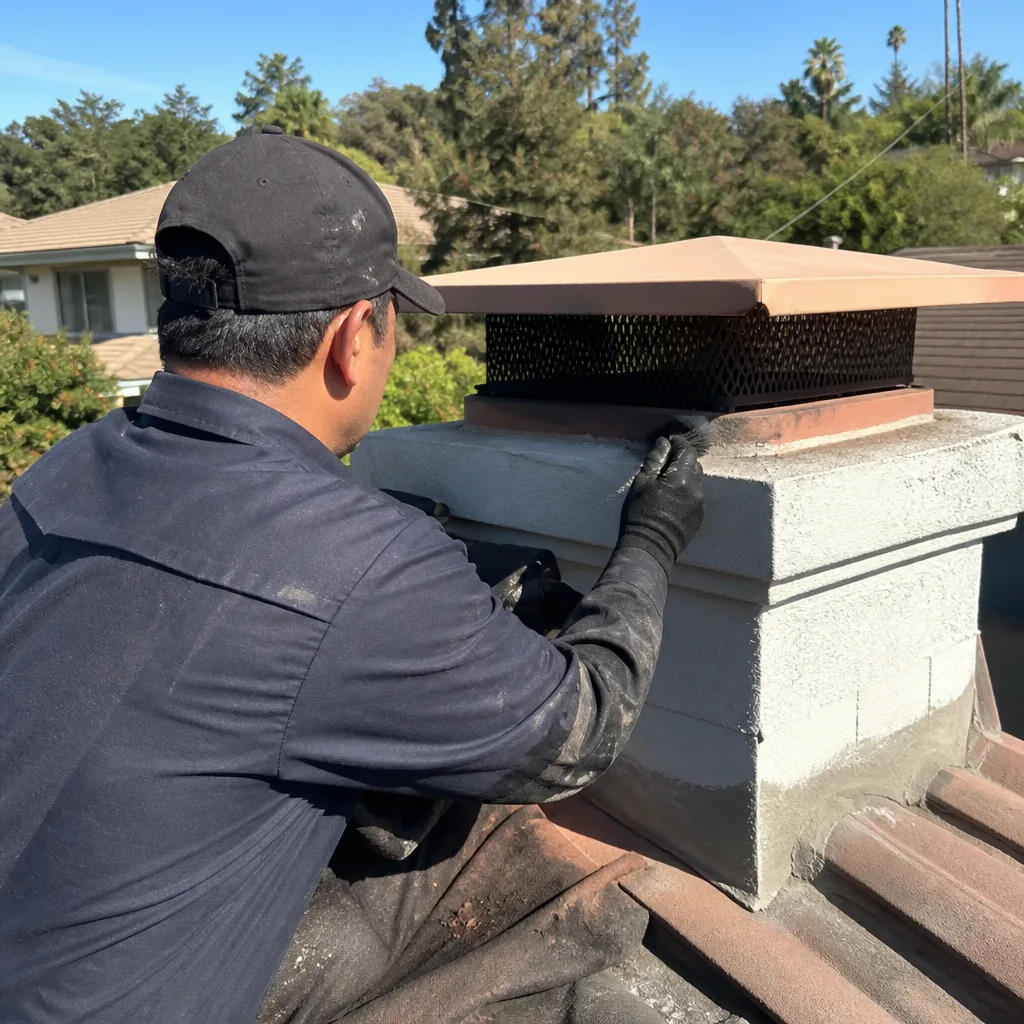 After
AfterDIY vs Professional Chimney Cleaning: The Pasadena Homeowner’s Decision Guide
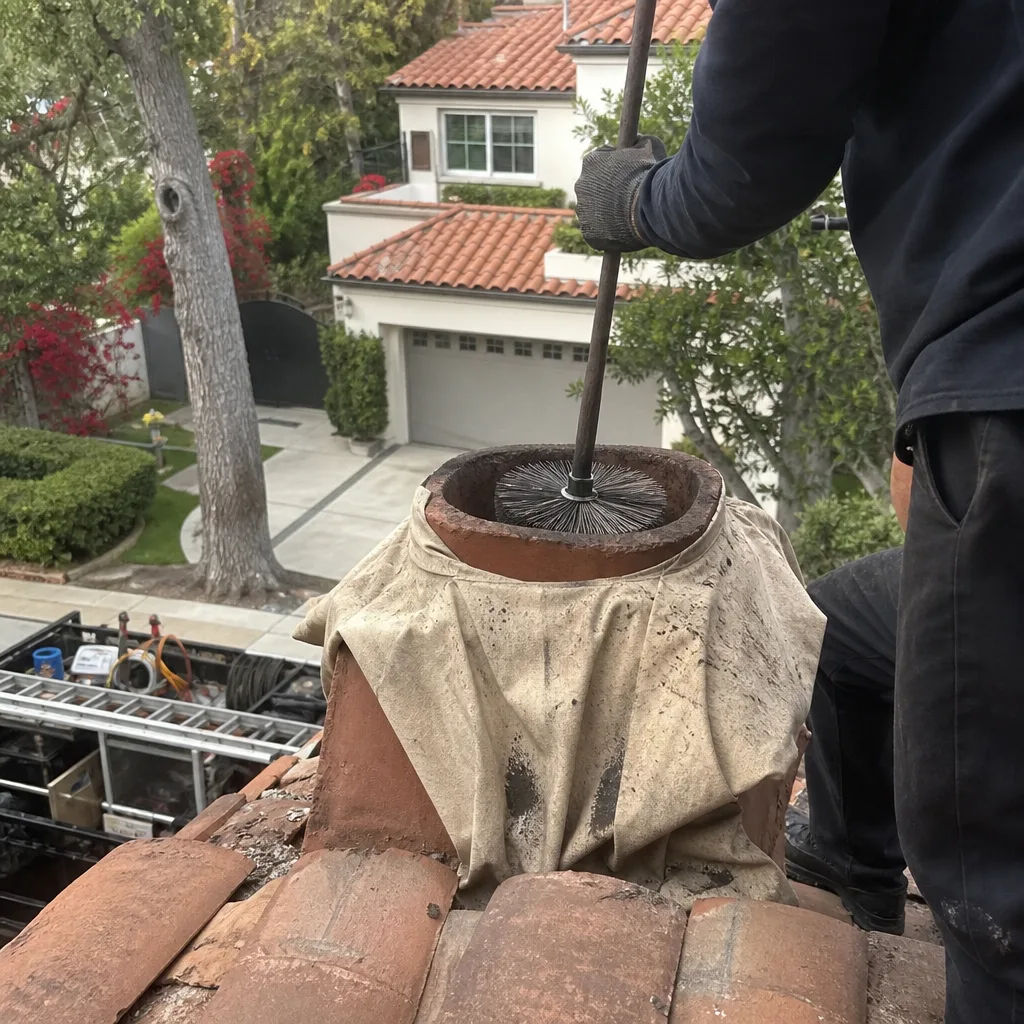
A chimney brush kit from a hardware store cleans what you can reach. It does not find the cracked tile at the second flue section, the collapsed smoke shelf, or the stage-two creosote glaze that a brush spreads rather than removes - three findings that show up on camera in Pasadena homes every season. Most homeowners don’t know where the line sits between what they can safely handle and what requires NFPA 211 Level 2 credentials, documented inspection, and professional-grade equipment. This guide maps that line precisely: which tasks are genuinely DIY-feasible, which require tools you won’t own, and why Pasadena’s fire-risk zoning and insurance documentation rules make the distinction costly to ignore. For more guides & resources on chimney maintenance, explore our blog.
Quick Answer
DIY chimney cleaning in Pasadena is appropriate for surface-level firebox prep and light brush work on short, straight flues with no prior damage history. A professional cleaning and inspection is required for camera documentation of flue liner condition, creosote classification, and structural integrity - the combination most Pasadena homeowners’ insurance policies now require for fire-loss claim validity. The full professional scope includes written findings, photo records, and technician certification that DIY cannot produce.
Table of Contents
- What DIY Chimney Cleaning Actually Accomplishes
- The Complete Scope-of-Work: DIY vs Professional
- Equipment Costs and the Break-Even Math
- The Pasadena Insurance Documentation Gap
- Three Scenarios Where DIY Is Genuinely Appropriate
- How to Use DIY to Prepare for a Professional Visit
- Common Mistakes to Avoid
- When to Call a Professional
- Frequently Asked Questions
- The Bottom Line
BeforeAfterWhat DIY Chimney Cleaning Actually Accomplishes
Let’s be plain about what happens when you run a brush up a flue. The bristles scrape loose soot and flaky creosote from the accessible interior surface. If your flue is relatively straight, relatively short, and relatively clean to begin with, you will remove material that could otherwise ignite. That’s not nothing. In our experience across more than 38,000 chimney inspections since 2009, we’ve seen plenty of Pasadena fireplaces where a homeowner’s annual brushing kept Class I creosote (soot and loose flakes) from accumulating to dangerous depth.
But brushing is not inspecting. The brush doesn’t tell you the flue liner has a hairline crack at the second joint, where thermal expansion opens the gap every time you build a fire. It doesn’t reveal that the smoke shelf - the flat area behind the damper - has collapsed enough to obstruct proper draft. It cannot distinguish between Class I creosote (brushable), Class II (glazed and requiring chemical treatment or mechanical removal), and Class III (the hardened, tar-like deposit that a brush simply polishes and redistributes).
In the Arroyo Seco-adjacent neighborhoods of Pasadena, where many homes date to the 1920s-1950s, we’ve found clay tile liners with spalling (surface flaking) that a brush passes right over. The homeowner feels resistance ease, assumes the flue is clean, and never knows the liner surface is degrading. Spalling tile reduces liner thickness, increases heat transfer to surrounding structure, and creates the exact conditions that lead to structure fires in older Pasadena homes with original framing.
The DIY step that actually helps: removing ashes, cleaning the firebox floor, and brushing the accessible flue length before a professional arrives. This prep reduces the time a technician spends on basic cleaning, which can lower your bill if you’re paying hourly. More importantly, clean surfaces make camera inspection faster and findings clearer - a dirty flue can hide defects that a clean one reveals.
What DIY does not accomplish and cannot accomplish:
- Camera inspection of the full flue length, including the smoke chamber and smoke shelf
- Measurement of creosote thickness and classification
- Assessment of liner integrity, joint condition, and mortar deterioration
- Documentation of findings in a format insurers accept
- Evaluation of crown, cap, and exterior masonry condition
- Combustion analysis or draft pressure testing
The gap between “looks clean” and “is safe” is where most DIY efforts stall. A flue can look brush-clean and still contain the conditions that lead to chimney fires or carbon monoxide intrusion. Pasadena’s combination of older housing stock, seasonal Santa Ana wind patterns that affect draft behavior, and increasingly strict insurance documentation requirements makes that gap particularly expensive to ignore. Our Seasonal Chimney Cleaning Care for Pasadena: Year-Round Homeowner’s Guide explains how timing affects both safety and cost.
The Complete Scope-of-Work: DIY vs Professional
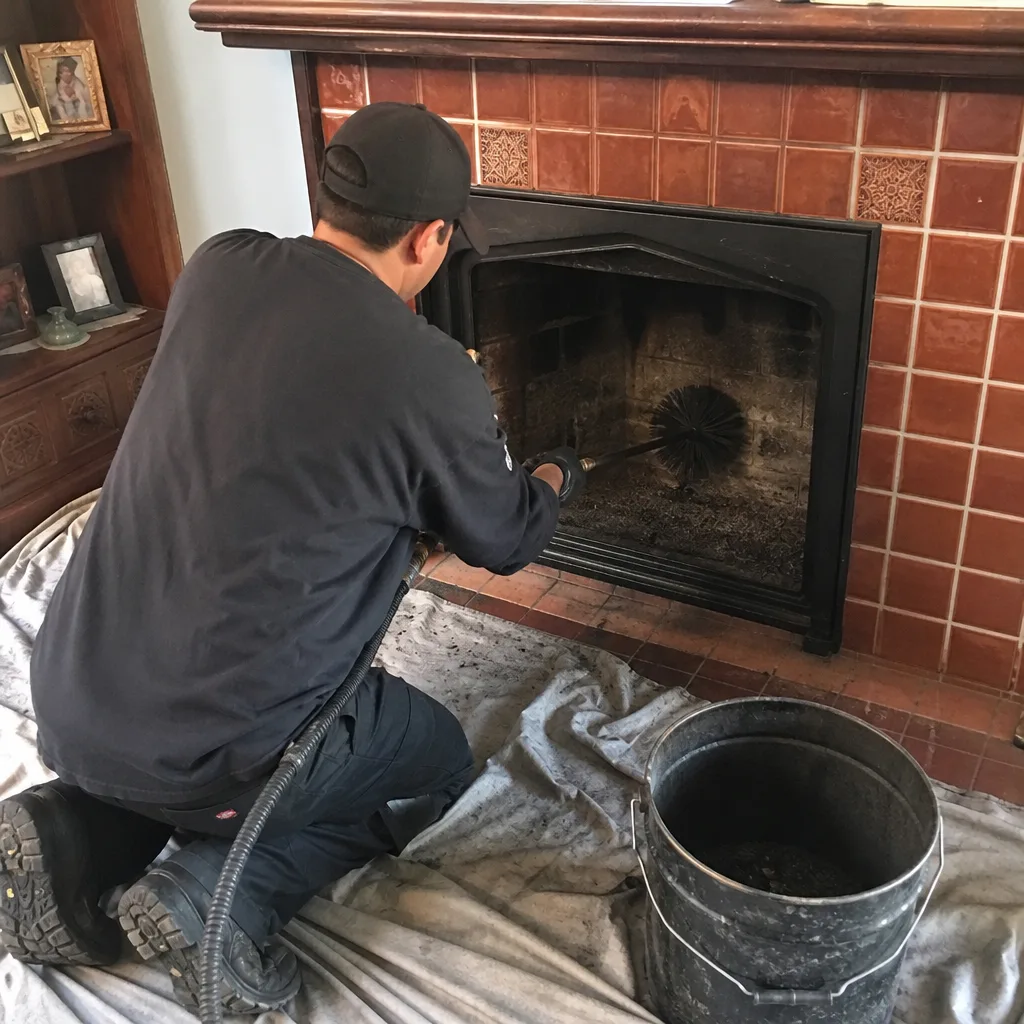
We’ve broken every task in a complete chimney service into three categories: what a competent homeowner can do with standard tools, what requires professional-grade equipment, and what requires professional credentials or certification. The reason for each designation matters as much as the designation itself.
| Task | DIY-Feasible | Professional Required | Specific Reason |
|---|---|---|---|
| Firebox ash removal and surface cleaning | Yes | No | Standard shop vacuum with HEPA filter; no structural assessment needed |
| Firebox refractory panel inspection (visual) | Yes | No | Cracks visible to naked eye; panels are replaceable consumer parts |
| Flue brushing (straight, short flue, no prior damage) | Yes | No | Brush kits $40-$80; risk is minimal if no obstructions or damage history |
| Smoke chamber and smoke shelf access | No | Yes | Requires specialized extension rods, mirror systems, or camera; area is structurally complex and collects the most hazardous deposits |
| Creosote classification (Class I/II/III determination) | No | Yes | Requires trained visual assessment and thickness measurement; misclassification leads to incorrect treatment and fire risk |
| Internal flue camera inspection | No | Yes | Equipment cost $2,500-$8,000; interpretation requires NFPA 211 training; documentation must meet insurer standards |
| Liner integrity assessment (cracks, spalling, joint separation) | No | Yes | Defects are often microscopic or hidden behind deposits; camera with articulating head required; repair specifications require engineering knowledge |
| Crown, cap, and exterior masonry evaluation | Limited | Recommended | Homeowner can spot obvious damage from ground or roof (with proper fall protection); subtle crown cracks and cap flashing defects require close inspection |
| Chimney cap installation or replacement | Sometimes | Often | Standard caps on single-flue chimneys are DIY-feasible; multi-flue, custom, or wind-resistant caps (common in Pasadena’s Arroyo wind zones) require proper fitting and securing |
| Damper repair or replacement | No | Yes | Top-sealing dampers and throat dampers affect draft calculations; improper installation creates carbon monoxide risk |
| Combustion analysis and draft testing | No | Yes | Requires digital manometer and combustion analyzer ($1,200+); interpretation affects safety clearance and appliance efficiency |
| Written inspection report with photo documentation | No | Yes | Insurers require technician certification, standardized format, and archival record; DIY documentation is not accepted for claim purposes |
| Creosote removal (Class II/III, glazed or hardened) | No | Yes | Requires chemical treatment, mechanical rotary removal, or controlled blasting; improper removal damages liner and spreads flammable material |
The pattern is consistent: the tasks that affect whether your chimney functions safely are the ones that require tools, training, or documentation you cannot replicate at home. The tasks that improve appearance and reduce basic fire risk are within reach of a careful homeowner.
In Pasadena specifically, the wind-driven rain pattern from the San Gabriel Mountains accelerates crown deterioration and cap flashing failure. A homeowner can spot a missing cap or visible crown crack from the ground. Determining whether that crack has penetrated to the structural concrete, or whether water has reached the flue liner through the crack, requires close inspection and often moisture meter readings - professional scope.
Equipment Costs and the Break-Even Math
Let’s talk actual dollars, because “DIY saves money” is only true if you account for everything you need to buy, everything you still need to hire, and the value of documentation you’re not producing. Our Chimney Cleaning Cost Breakdown: The Pasadena Homeowner’s Reference for 2026 details current pricing for professional services.
A complete DIY chimney cleaning setup for a Pasadena homeowner with a standard masonry fireplace:
- Chimney brush (polypropylene for metal flues, wire for masonry) - $35-$65
- Extension rods, 6-foot minimum for two-story homes - $40-$75
- HEPA-rated ash vacuum (standard shop vacs expel fine particulate) - $80-$140
- Drop cloths, protective eyewear, respirator mask (N95 minimum, P100 preferred for creosote dust) - $25-$45
- Flashlight or headlamp with sufficient lumens for flue inspection - $15-$30
- Mirror on extendable handle for smoke chamber peek - $12-$20
Total first-time equipment investment: $207-$375. Most homeowners land in the $180-$260 range if they already own a suitable vacuum and basic safety gear.
Annual consumables (brush replacement every 2-3 years, filter replacements, cleaning solvents): $25-$40 per year.
Now, what does this equipment not include? No camera system. No combustion analyzer. No manometer. No certification that insurers recognize. No written report. No photo archive. The equipment buys you the brush-and-vacuum step only.
The break-even calculation changes when you add the inspection you still need. A professional chimney cleaning and inspection in Pasadena typically runs $200-$350 for a standard masonry fireplace, depending on accessibility, creosote severity, and whether the inspection is Level 1 (visual) or Level 2 (camera). If you DIY the brushing and hire a professional for camera inspection only, you’re looking at $150-$250 for the inspection component - plus your $180-$260 in equipment, plus your time.
The math only works in your favor if:
- You have multiple fireplaces or clean annually for many years, amortizing equipment cost
- Your system has no history of damage, no unusual construction, and no insurance documentation requirement
- You genuinely enjoy the work and value the learning process
For most Pasadena homeowners we’ve served since 2009, the break-even point arrives around year four - assuming nothing goes wrong, no equipment upgrades are needed, and the homeowner never discovers damage that requires professional assessment anyway. In our experience, roughly 40% of “routine” cleanings reveal findings that shift the job from cleaning to repair or documented monitoring. The DIY equipment investment doesn’t hedge that risk.
One more cost rarely discussed: disposal. Creosote-laden debris is hazardous waste in California. Professional services include proper disposal. DIY homeowners must transport to designated facilities or risk improper disposal fines. Pasadena’s household hazardous waste collection events accept creosote debris, but require appointment and specific container preparation - another time cost.
The Pasadena Insurance Documentation Gap
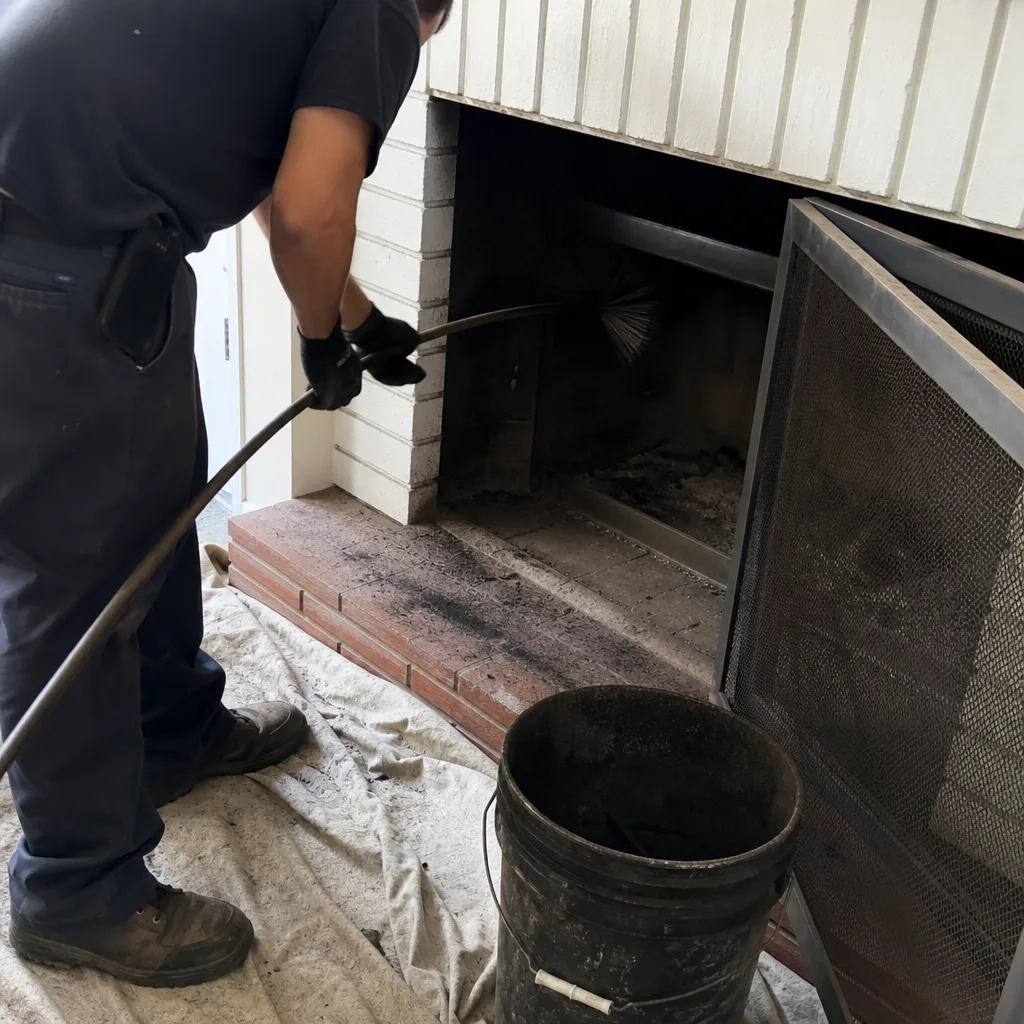
This is where the DIY vs professional distinction becomes consequential in dollars, not just preference.
Most Pasadena homeowners’ insurance policies issued or renewed since 2021 contain language requiring “documented professional inspection” for chimney-related fire losses. The exact wording varies by carrier, but the pattern is consistent: if a chimney fire occurs and the homeowner cannot produce inspection documentation from a certified technician within the prior 12-24 months, the claim faces denial or reduction on grounds of “failure to maintain.”
A DIY cleaning produces: nothing documentable. No technician certification. No standardized report. No photo record. No archival file. If you cleaned your own chimney in October and a fire occurs in January, your insurer’s adjuster will ask for inspection records. Your brush purchase receipt proves only that you bought a brush.
A professional Level 2 inspection produces:
- Written scope of work and findings, signed by certified technician
- Date-stamped photo record of flue interior, smoke chamber, and accessible components
- Creosote classification and thickness measurement
- Liner condition assessment with specific defect notation
- Recommendations with priority ranking (immediate, monitor, routine maintenance)
- Archival record maintained by the company for future reference
Clause 4 of the Haven Standard requires this photo record on every job. We’ve maintained that archive since 2009 - every chimney, every visit, every finding. When a Pasadena homeowner needs documentation for an insurance claim, a real estate transaction, or warranty dispute, we can produce the record. A DIY cleaning cannot.
The fire-risk zoning context matters. Pasadena sits in a high fire hazard severity zone, designated by Cal Fire. Insurance underwriters weight chimney documentation more heavily here than in lower-risk zones. We’ve had homeowners in the Linda Vista and Annandale areas tell us their carriers specifically requested Level 2 inspection records before binding or renewing policies. The request is becoming standard, not exceptional.
There’s also the liability question. If a DIY cleaning damages the flue liner (overly aggressive brushing, wrong brush material for the flue type, rod separation leaving hardware in the flue), that damage may not be covered. Professional services carry general liability and errors-and-omissions coverage; the Haven Standard requires both. DIY mistakes are homeowner responsibility.
The documentation gap is not theoretical. In 2023, we provided expert documentation for three Pasadena-area homeowners whose insurers initially denied chimney fire claims. In each case, the denial was based on absence of professional inspection records. Two had performed DIY cleanings they believed satisfied maintenance requirements. The third had hired a sweep who provided no written report - a “flashlight inspection” that the insurer correctly rejected as insufficient. All three cases resolved in the homeowner’s favor only after we produced historical Level 2 records or performed retroactive documented inspections with dated photo evidence.
Three Scenarios Where DIY Is Genuinely Appropriate
We’re not here to discourage every homeowner from touching their fireplace. There are specific situations where DIY cleaning is reasonable, responsible, and cost-effective.
Scenario 1: Gas-log fireplace that hasn’t been used in a season
Gas fireplaces produce minimal creosote and no ash in the traditional sense. What accumulates is dust, pet hair, and occasional spider webs in the firebox and on the logs. A homeowner can safely vacuum the firebox (with the gas shut off at the valve), wipe surfaces with a damp cloth, and use compressed air to clear the pilot assembly area. The flue still needs professional inspection every 2-3 years for corrosion, condensation damage, and cap integrity, but annual DIY surface cleaning is appropriate.
Important caveat: if you smell gas at any point, stop. Do not attempt diagnosis. Close the valve, ventilate, and call your gas utility or a professional. Carbon monoxide from improperly vented gas fireplaces kills silently. The DIY line stops at fuel connection and venting assessment.
Scenario 2: Recently inspected system with no findings
If your chimney received a Level 2 inspection within the past 12 months with a clean report - no creosote accumulation beyond Class I, no liner defects, no structural concerns - a DIY brushing between professional visits is reasonable maintenance. You’re essentially extending the clean condition documented by the professional inspection.
The key is “documented.” If you don’t have the written report with specific findings, you don’t know what condition you’re extending. “The last guy said it looked fine” is not documentation. Get the report, read the findings, confirm the date, then proceed with confidence.
Scenario 3: Preparing for a professional visit to reduce scope and cost
This is the most strategically valuable DIY application. A clean firebox and lightly brushed flue allow the professional technician to proceed directly to camera inspection and assessment. The visit takes less time, which can reduce cost if your provider bills hourly. More importantly, clean surfaces yield clearer camera images, which means more confident findings and fewer “inconclusive” recommendations that lead to return visits.
What to do:
- Remove all ashes and debris from the firebox 48 hours before the visit (ashes retain heat longer than most homeowners expect)
- Run a brush through the accessible flue length to remove loose material
- Photograph any visible cracks, staining, or damage in the firebox and hearth area
- Note any draft issues, smoke spillage, or odors you’ve experienced - with dates and conditions
- Clear a 6-foot workspace around the fireplace for equipment access
What this prep communicates to the technician: you’re an informed homeowner who values their time. In our experience, prepped visits run 20-30% faster, and the technician can focus diagnostic attention on subtle findings rather than basic cleaning.
How to Use DIY to Prepare for a Professional Visit
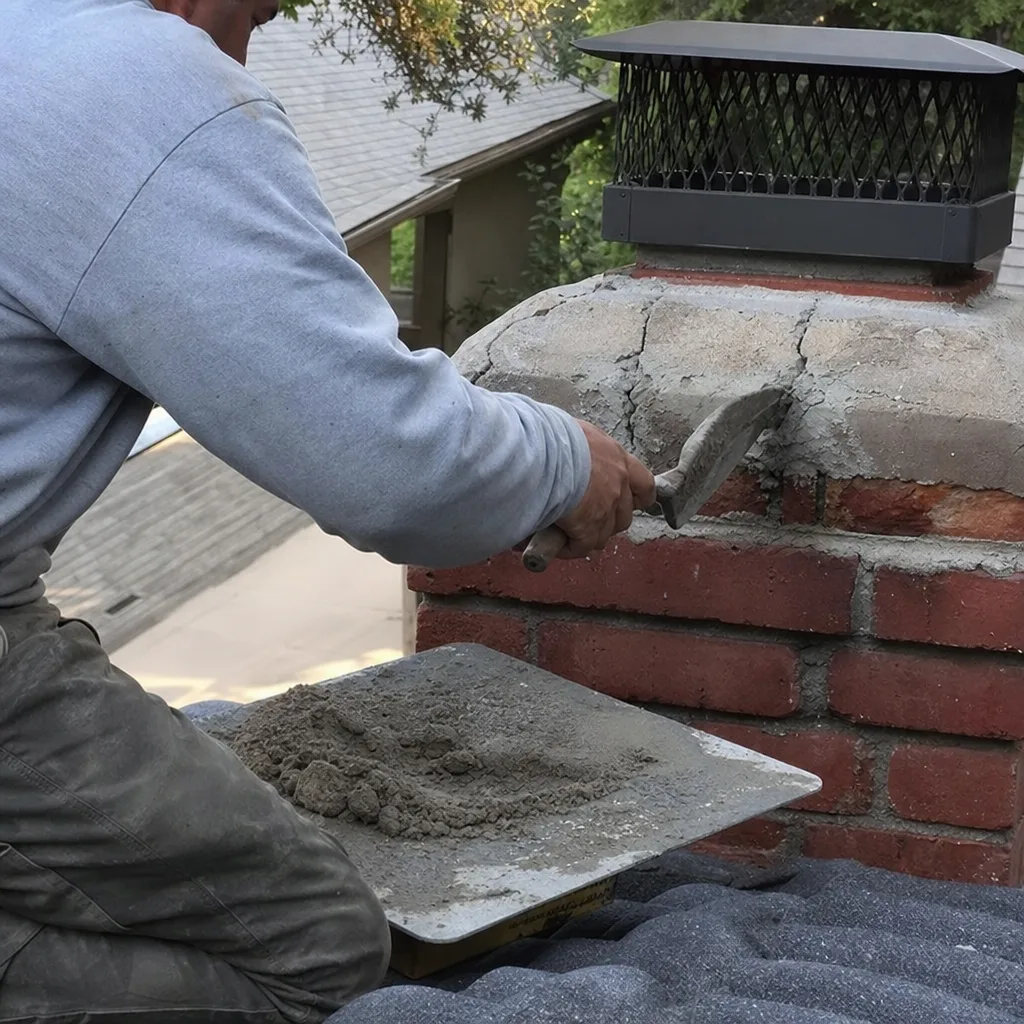
The smartest homeowners we serve in Pasadena use DIY cleaning as a prelude to professional inspection, not a substitute. Here’s how to maximize the value of both.
Photograph before you clean
Take dated photos of the firebox, damper, and visible flue opening before touching anything. These establish baseline condition. If the professional finds damage you didn’t notice, your photos may reveal whether it was pre-existing or occurred since your last inspection - relevant for warranty and insurance purposes.
Document your process
Note the date, brush size and material, rod length used, and any resistance or unusual sounds during brushing. If a rod section binds or you feel grit that seems excessive, write it down. This information helps the professional target their camera inspection.
Measure and record
Flue dimensions matter for brush selection and liner assessment. Measure your flue’s interior width and height (or diameter for round flues) at the opening. Note whether it’s clay tile, metal, or cast-in-place. If you know the liner brand - DuraFlex, HeatShield, or another - include that. Different liner materials show different failure patterns.
Check accessible exterior components
From ground level or a secure ladder position (with a spotter, proper angle, and no overreaching), observe:
- Cap presence and condition - missing, damaged, or improperly secured?
- Crown surface - visible cracks, staining, or vegetation growth?
- Flashing where chimney meets roof - lifted, corroded, or separated?
- Brick or stucco condition - spalling, cracking, or efflorescence (white powdery deposits indicating moisture migration)?
Photograph anything questionable. Do not climb onto the roof if you’re not equipped and experienced for it. Falls from roof height are the leading cause of DIY home maintenance injury. Pasadena’s tile and composite shingle roofs are particularly unforgiving.
Prepare specific questions
Armed with your observations, ask the professional:
- “I felt resistance at about 12 feet - can the camera confirm what’s there?”
- “I noticed staining on the back wall of the firebox - what causes that pattern?”
- “The cap seems loose - is that a replacement or repair situation?”
- “My brushing produced more material than last year - does the camera show why accumulation increased?”
Specific questions get specific answers. “Is everything okay?” gets a shrug and a bill. Your prep time converts to diagnostic precision.
Request the documentation format
Before booking, confirm what documentation you’ll receive. The Haven Standard specifies written price before work (Clause 1), written scope, written warranty, and photo record (Clause 4). If a provider cannot describe their documentation in specific terms, that’s information too.
Common Mistakes to Avoid
- Using the wrong brush material for the flue type. Wire brushes on stainless steel liners scratch and thin the metal, accelerating corrosion. Polypropylene brushes on heavy masonry creosote glaze without pre-treatment simply polish the deposit. Match brush to flue material and creosote class - or hire someone who knows how.
- Brushing a damaged flue. If you know or suspect liner damage from a prior inspection, do not brush. Mechanical action can enlarge cracks, dislodge fractured tile, or wedge debris into gaps. In Pasadena’s older homes with original clay liners, we’ve seen homeowner brushing convert a monitorable crack into an active repair requirement.
- Skipping the smoke chamber. The smoke chamber - the area above the damper that funnels smoke into the flue - is where the most hazardous creosote accumulates. It’s also the hardest to reach. DIY brush kits rarely include the angled tools or extension mirrors needed. A clean flue with a packed smoke chamber is still a fire hazard.
- Improper creosote disposal. California hazardous waste regulations apply. Pasadena’s scheduled collection events require pre-registration and specific container types. Improper disposal in household trash creates fire risk in collection vehicles and legal exposure for the homeowner.
- Assuming “no smell” means “no problem.” Carbon monoxide is odorless. Draft problems don’t always produce smoke in the room. A flue can appear to draw properly in mild weather and fail dangerously during Santa Ana conditions when atmospheric pressure drops. Only pressure testing and combustion analysis reveal these conditions.
- Buying equipment without measuring first. Flue dimensions vary. Brush diameter must match within 1/2 inch for effective cleaning. Rod length must reach the full flue height plus working room. Pasadena’s hillside homes often have extended chimney heights for draft purposes - a standard 12-foot rod set may be insufficient.
- Treating YouTube as training. Video demonstrations rarely account for your specific chimney construction, local code requirements, or the condition variations that determine safe procedure. Use videos for equipment familiarity, not for procedure authorization.
When to Call a Professional
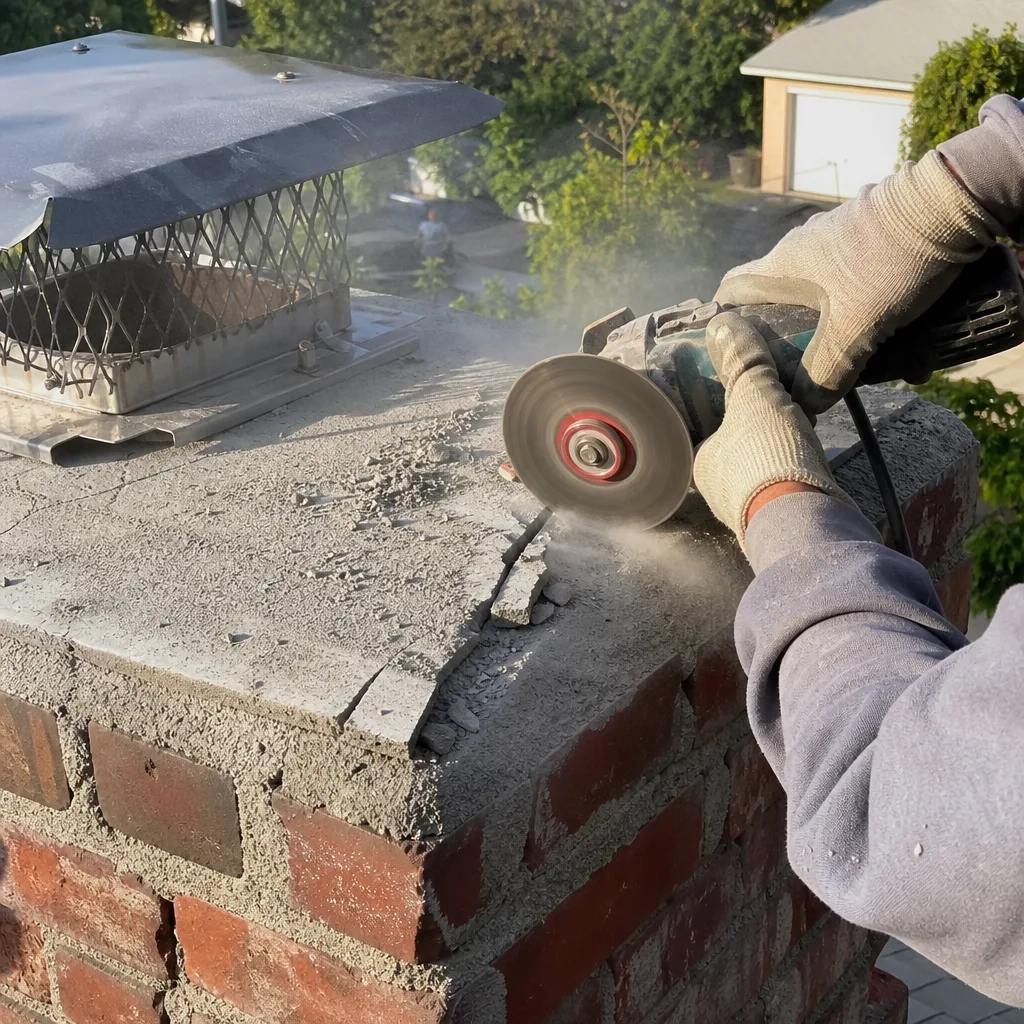
Call a professional before DIY if any of the following apply: your chimney has not been inspected in over 12 months; you’ve noticed smoke spillage, draft problems, or unusual odors; you’re buying or selling the home; your insurance policy requires documented inspection; the flue is not straight (has offsets or bends); you’ve had a chimney fire previously; or the fireplace shares a flue with another appliance.
Call immediately (same day, do not use the fireplace) if you see visible cracks in the firebox or flue liner, if bricks or debris have fallen into the firebox, if you smell gas near a gas fireplace, or if you’ve had a chimney fire event - even a small one. Structural damage from thermal shock may not be visible from the firebox but creates immediate hazard.
Chimney repair in Pasadena often starts with a call that sounds like “something doesn’t seem right.” Trust that instinct. The cost of inspection is modest; the cost of delaying is not.
Level Two Chimney Pasadena offers free estimates in Pasadena - call (213) 459-6058. Every estimate includes a written price, written scope, and explanation of what documentation you’ll receive. No work begins without your written approval. Clause 1 of the Haven Standard.
Frequently Asked Questions
A standard chimney cleaning and Level 1 inspection in Pasadena typically runs $200-$350 for a masonry fireplace, with Level 2 camera inspection adding $50-$150 depending on flue accessibility and number of appliances served. Gas fireplace service runs lower, typically $150-$250. We deliver a written price before any work starts - always, with no exceptions. Call (213) 459-6058 for an exact quote; estimates are free.
You need a new liner when inspection reveals conditions that cleaning cannot remedy: cracked or missing clay tiles, corrosion-thinned metal, spalling that exposes the chimney structure to excessive heat, or gaps that allow combustion gases to leak. Cleaning improves surface condition; it does not restore structural integrity. We recommend liner replacement only when camera evidence shows specific defects, and we show you the footage before discussing options. Materials we install include DuraFlex stainless steel and HeatShield cerfractory flue sealant systems, selected based on your chimney’s construction and your appliance type.
NFPA 211 recommends annual inspection for all chimney systems, with cleaning frequency determined by creosote accumulation, not calendar alone. In practice, Pasadena homeowners who burn wood 2-3 times weekly during season typically need annual cleaning. Occasional users may extend to every 2-3 years if inspection confirms minimal accumulation. The combination of coastal moisture and inland temperature swings in Pasadena can accelerate creosote formation compared to drier climates - another reason annual inspection matters more than a fixed cleaning schedule.
Three outcomes, in order of probability: accumulated creosote ignites, causing a chimney fire that damages liner and surrounding structure; liner deterioration allows combustion gases including carbon monoxide to enter living space; or moisture intrusion degrades masonry and metal components, leading to costly rebuild rather than repair. The first two are immediate safety hazards. The third is a financial hazard that compounds with delay. All three are detectable by annual Level 2 inspection before they become emergencies. Call (213) 459-6058 to schedule; estimates are free.
No - not for fire-loss claim purposes. Insurance documentation requires professional inspection with written report, photo record, and technician certification. Your DIY cleaning receipt or personal notes do not meet this standard. If your policy contains chimney-specific maintenance language (increasingly common in Pasadena’s fire hazard zones), only professional Level 1 or Level 2 inspection documentation satisfies the requirement. We archive all records under Haven Standard Clause 4 and can produce documentation on request for claims or real estate transactions.
Level 1 is a visual inspection of accessible portions - what a technician can see with a flashlight from the firebox and roof. Level 2 adds internal camera scan of the full flue length, smoke chamber, and smoke shelf, plus inspection of accessible attics, crawl spaces, and basements for chimney structure. Level 2 is required for real estate transactions, after chimney fire or seismic event, and when changing appliance type. In our practice, Level 2 is the default because surface-visible inspection misses the defects that create the most serious hazards. The camera equipment we use has been standard since 2009 - years before insurers began requesting documentation.
You’ll know it removed loose material if your brush came back dirty and the firebox looks cleaner. You won’t know if it removed all hazardous deposits, if it damaged the liner, or if it missed defects that a camera would reveal. The only verification is professional inspection. If you’ve done DIY cleaning, schedule a Level 2 inspection to confirm the flue condition and establish documentation. Think of DIY as maintenance between verifications, not a replacement for verification.
The Bottom Line
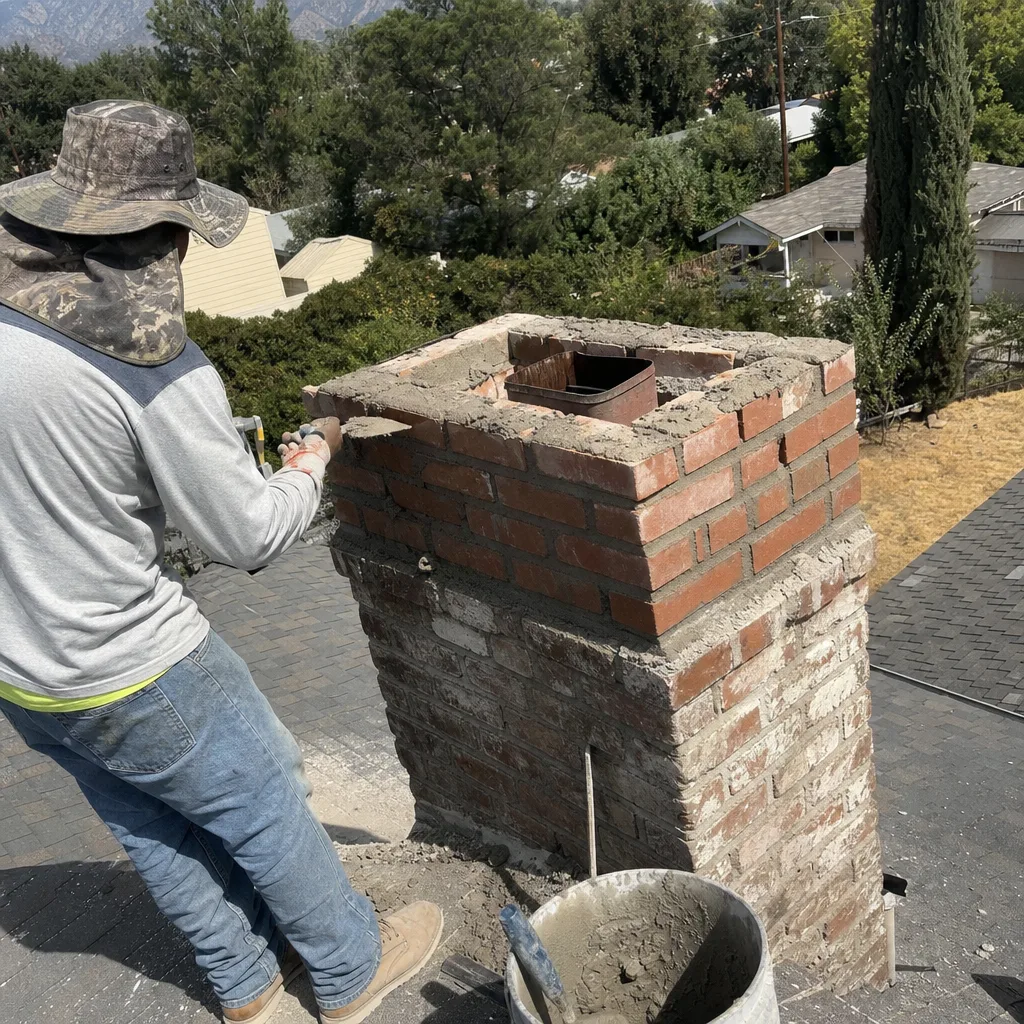
DIY chimney cleaning has its place: surface preparation, basic maintenance between professional visits, and informed homeowner participation in fireplace care. It does not substitute for camera inspection, creosote classification, liner assessment, or the documented record that Pasadena insurance policies increasingly require. The line is clear - brush what you can reach and see, verify what you cannot. The cost of professional inspection is modest insurance against the cost of undetected defect. We’ve completed more than 38,000 chimney services since 2009, every one with a written price before work started and a photo record on completion. That documentation has real value when you need it.
Ready for a professional assessment? Fireplace services in Pasadena from Level Two Chimney Pasadena include Level 2 camera inspection, written findings, and the documented record your insurance may require. Call (213) 459-6058 for a free estimate. Written price before any work starts. 365-Day Done Right Promise. And a photo record you can keep.
Written by Corrine Halstead, Owner at Level Two Chimney Pasadena, serving Pasadena since 2009.